How AI Search Is Changing the Future of SEO
Introduction
Imagine searching for something online and receiving a personalised answer instead of a page full of links. Artificial intelligence is changing how people search for information, making the experience faster and more conversational.
For years, search engines like Google and Bing have helped users find information through relevant website links. However, with AI-powered tools such as Google AI Overviews and ChatGPT Search, users can now ask detailed questions and receive answers within seconds.
How AI Search Is Changing the Future of SEO is becoming an important topic as this shift changes how people discover information and how businesses attract visitors. Traditional SEO isn't disappearing; it's evolving to keep up with changing search behaviour. Understanding these changes is essential for businesses and digital marketers who want to maintain their online visibility.
1. Understanding AI Search and How It Works
Artificial Intelligence (AI) search refers to the use of artificial intelligence technologies to understand search queries, process information and provide relevant answers. Unlike traditional search engines that mainly display a list of website links, AI-powered search experiences can understand the context of a question and generate a direct response using information from different sources.
For example, a person searching for “best ways to improve website traffic” might traditionally receive several website links to explore. With AI search, the user may receive a summarised explanation containing different strategies, along with links to relevant sources for further information.
AI-powered search experiences include Google’s AI Overviews, AI Mode and ChatGPT Search. These technologies make searching more conversational, allowing users to ask follow-up questions and explore topics in greater depth.
Traditional Search vs AI Search

Traditional search focuses heavily on presenting relevant web pages according to a user’s query. Users usually visit multiple websites to compare information and find the answers they need.
AI search takes a different approach by combining information and presenting it in a more direct and conversational format. It can also provide links to sources, allowing users to explore the original information.
The main difference is the search experience. Traditional search often requires users to gather information from different websites, while AI search attempts to make that process faster and more convenient.
2. How AI Search Is Transforming SEO
The growth of AI-powered search is changing the strategies businesses use to improve their online visibility. SEO is no longer only about placing keywords throughout a webpage or trying to achieve a higher position in traditional search results. It is increasingly important to understand users’ needs and provide information that genuinely answers their questions.
A Shift from Keywords to Search Intent
Keywords have always played an important role in SEO. However, modern search technologies are becoming better at understanding the meaning and purpose behind a user’s search.
For example, instead of simply searching for “best laptop”, a user might ask, “Which laptop is suitable for a university student studying graphic design?”
The second search provides more context about the user’s requirements. AI-powered search can use this context to generate a more relevant response.
As a result, digital marketers need to focus not only on specific keywords but also on search intent. Creating content that answers real questions and addresses users’ problems can make websites more useful and relevant.
The Rise of AI-Generated Answers
One of the most noticeable changes in search is the increasing use of AI-generated summaries. Features such as Google AI Overviews can provide users with an overview of a topic directly on the search results page.
Although this improves convenience, it also creates challenges for website owners. When users receive the information they need without visiting another website, some pages may experience fewer clicks.
A July 2025 Pew Research Center analysis of 900 US adults found that users clicked a traditional search result in 8% of visits when an AI summary appeared, compared with 15% when no AI summary appeared.
This finding highlights an important challenge for digital marketers: achieving visibility is no longer just about attracting clicks. Businesses must also consider how their content can become a useful and trusted source of information in AI-generated responses.
The Importance of High-Quality Content
As AI search becomes more common, producing meaningful and reliable content is increasingly important. Search engines aim to provide users with helpful information rather than simply rewarding pages that repeat popular keywords.
Content should be original, accurate, informative and easy to understand. Businesses can strengthen their content by including practical examples, expert opinions, original research and useful explanations.
Google also emphasises the importance of helpful, reliable and people-first content. This demonstrates that creating valuable information for readers remains a fundamental part of successful SEO.
3. The Rise of Generative Engine Optimization (GEO)
The development of AI search has introduced a growing concept in digital marketing known as Generative Engine Optimization (GEO).
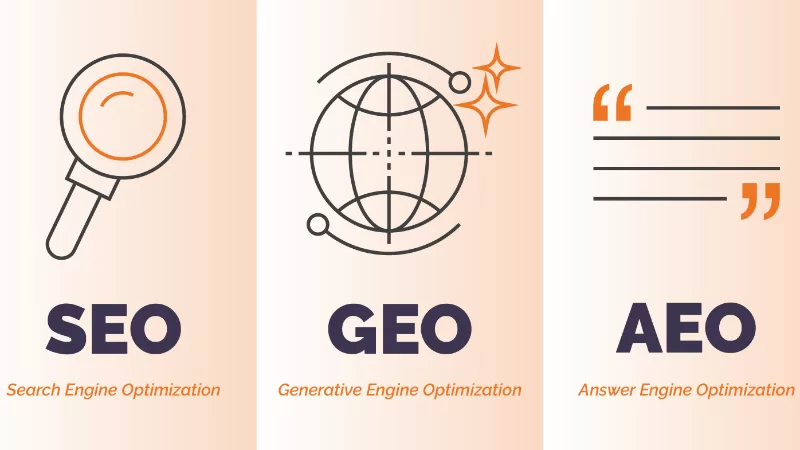
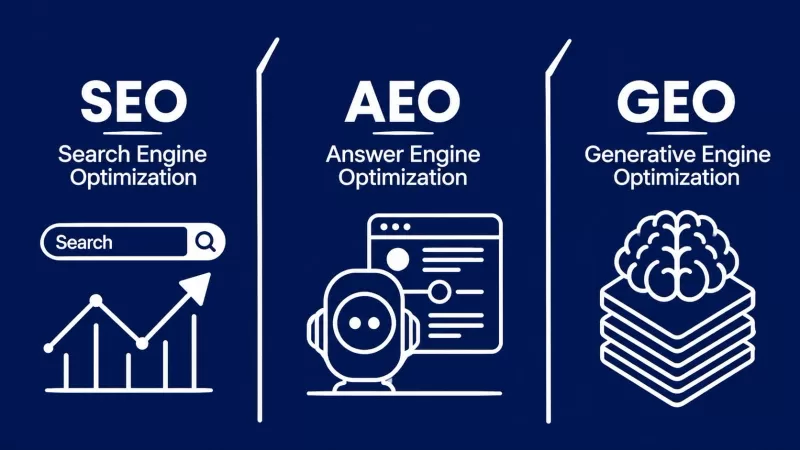
Traditional SEO focuses on improving a website’s visibility in search engine results. GEO, on the other hand, focuses on increasing the chances of content being discovered, referenced or included in responses generated by AI-powered search platforms.
As more people use AI assistants to find information, businesses are beginning to explore ways to make their content more accessible and useful to these systems.
SEO vs GEO: Understanding the Difference
Although SEO and GEO have different areas of focus, they share an important goal: helping people discover useful information.
SEO involves strategies such as keyword research, technical website improvements, quality backlinks and content optimisation to improve search visibility.
GEO focuses more on making information clear, trustworthy, well-organised and useful enough to be referenced in AI-generated answers.
For example, a travel website may use traditional SEO to rank for the keyword “best places to visit in Bangladesh”. At the same time, it can use clear explanations, updated travel information and detailed recommendations to make its content useful for AI-powered search experiences.
It is important to understand that GEO does not replace SEO. Both approaches can work together as search technology continues to develop.
4. Challenges and Opportunities for Digital Marketers
AI search is creating both challenges and opportunities for businesses. While it makes information more accessible, it also changes how websites compete for attention.
Challenges of AI Search

One major challenge is the possibility of reduced website traffic. When AI tools provide direct answers, users may not feel the need to visit the websites that originally published the information.
Another challenge is increased competition for visibility. Businesses must create valuable content that stands out among numerous online sources.
There are also concerns about the accuracy of AI-generated answers. AI systems can sometimes misunderstand information or produce incorrect responses. This makes reliable sources and fact-checking especially important.
Furthermore, digital marketers must adapt to new ways of measuring online performance. Traditional website traffic and keyword rankings may not fully explain how visible a brand is across different AI-powered platforms.
New Opportunities in the Digital Marketing Industry
Despite these challenges, AI search offers exciting opportunities.
Businesses can reach audiences through new search experiences and establish themselves as reliable sources of information. Websites that provide original research, useful insights and detailed explanations may have more opportunities to be referenced in AI-generated responses.
AI tools can also help digital marketers research topics, understand audience interests, brainstorm content ideas and analyse information more efficiently.
Rather than viewing AI as a replacement for digital marketers, businesses can use it as a tool to improve productivity, creativity and decision-making.
5. How Businesses Can Prepare for the Future of SEO
Adapting to AI-powered search requires businesses to improve their existing SEO strategies while paying attention to changing user behaviour.
Here are some important practices businesses should consider:
1. Create Helpful and Original Content: Publish informative content that provides genuine value instead of simply repeating information available on other websites.
2. Understand Search Intent: Focus on what users want to know and create content that directly answers their questions.
3. Use Clear Content Structure: Organise information with descriptive headings, subheadings, short paragraphs and logical sections to make it easier to understand.
4. Maintain Accuracy and Credibility: Use reliable references, verify facts and update outdated information regularly.
5. Improve Website Performance: Ensure that websites load quickly, work properly on mobile devices and provide a smooth browsing experience.
6. Optimise Images: Use relevant images with descriptive alternative text (alt text) to improve accessibility and help search engines understand visual content.
7. Monitor Website Performance: Use tools such as Google Search Console and Google Analytics to monitor traffic, identify opportunities and understand how users interact with website content.
These practices help businesses maintain a strong SEO foundation while adapting to the changing search environment.
6. What Does the Future of SEO Look Like?

The future of SEO will likely involve a closer connection between artificial intelligence and traditional search technologies. As AI continues to develop, users may increasingly rely on conversational searches, personalised recommendations and digital assistants to discover information.
However, this does not mean that traditional search engines or SEO practices will become irrelevant. Websites will still need to provide useful information, maintain technical quality and build credibility.
The role of digital marketers will also continue to evolve. Instead of focusing entirely on search rankings, they will need to understand how people interact with different search platforms and how businesses can remain visible across them.
One thing is certain: technology will continue to change, but the need for accurate, helpful and trustworthy information will remain.
Conclusion
Artificial intelligence is changing the way people search for information, and the future of SEO will depend on how effectively businesses adapt to this transformation. From understanding search intent and creating high-quality content to exploring Generative Engine Optimization, digital marketers must be prepared to embrace new approaches.
Although AI search introduces challenges such as reduced website clicks and increased competition, it also creates opportunities for businesses to reach audiences in new ways.
Ultimately, successful SEO is not simply about ranking higher on a search engine. It is about understanding people, answering their questions and providing information they can trust. As the digital world continues to evolve, the businesses that combine technological innovation with creativity, credibility and a people-first approach will be better prepared for the future.
References
- Google Search Central. (2025). AI Features and Your Website. https://developers.google.com/search/docs/appearance/ai-features
- Google Search Central. Creating Helpful, Reliable, People-First Content. https://developers.google.com/search/docs/fundamentals/creating-helpful-content
- Google Search Central. Google’s Guide to Optimizing for Generative AI Features on Google Search. https://developers.google.com/search/docs/fundamentals/ai-optimization-guide
- Pew Research Center. (2025, July 22). Google Users Are Less Likely to Click on Links When an AI Summary Appears in the Results. https://www.pewresearch.org/short-reads/2025/07/22/google-users-are-less-likely-to-click-on-links-when-an-ai-summary-appears-in-the-results/
AI Assistance and Third-Party Material Disclosure
AI assistance was used for topic research, keyword selection, article planning, drafting and language organisation. The article was developed using AI-assisted research and writing. Factual information and statistics were checked against the references listed above. Third-party research and information have been acknowledged through citations. Images used in the article should be credited to their respective creators or sources.
Written by
Farzana Rahman Fuful
Comments (0)
No comments yet — be the first to share your thoughts.