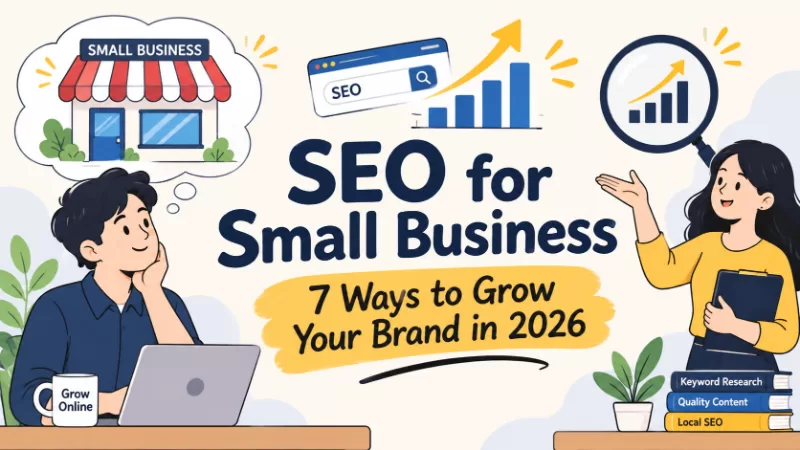
SEO for Small Business: 7 Ways to Grow Your Brand in 2026
A practical roadmap to help more customers find your business online

A good business deserves to be seen. But getting noticed online is not always easy, especially when you have a small budget. You may offer great products and treat every customer well, yet your website still gets very few visitors. It can feel frustrating when people choose other businesses simply because they find them first on Google.
This is where SEO for small business can help. It gives your website a better chance of reaching people who need what you sell. You do not have to spend thousands of dollars to get started. A few smart changes, useful pages, and regular effort can help more people discover your business in 2026.

1. Understand What Your Customers Search For
Before changing your website, take a moment to think like your customers. What would you type into Google if you needed your product or service? The answer can help you find useful keywords.
For example, a person looking for a new laptop may search for “best laptop shop in Dhaka.” Someone who needs a home repair service may search for “electrician near me.” These phrases tell you what people want.
Start with these keyword research methods:
• Google Keyword Planner: Find phrases related to your business and explore estimated search demand.
• Google Trends: Compare topics and see how interest changes over time.
• Google Search suggestions: Find the phrases people use when looking for products or services.
• Competitor websites: Notice the topics and services covered by other businesses in your field.
Do not choose a keyword just because it has a high search volume. A smaller, more specific phrase may bring visitors who are more likely to become customers.

For example, “shoes” is a broad keyword. “Women’s running shoes in Dhaka” gives a much clearer idea of what the customer wants. Choose words that match your business, your location, and your customers’ needs. Then use them naturally in your website content.
2. Give Visitors a Reason to Read Your Content
Imagine someone visits your website after searching for a product. They find a page full of general statements but no useful details. They probably will not stay for long.
Good content should answer questions, explain things clearly, and help people make decisions. It does not need to sound fancy. It needs to be useful.
Think about the questions customers ask before buying from you. If you run a furniture shop, people may want to know which wood lasts longer. If you own a skincare store, they may want to understand how to choose products for their skin type.

Turn those questions into helpful articles. Content ideas worth trying:
• Product guides that explain features and uses.
• Simple comparisons between different products.
• Answers to common customer questions.
• Guides that explain how a service works.
• Tips based on your own business experience.
Add details that readers cannot find on every other website. Share examples, explain common mistakes, and include useful photos where possible.
In 2026, search engines and AI-powered search services can use information from websites to answer user questions. Clear facts, original insights, and well-organized content make your pages easier to understand.
REMEMBER
You do not need to publish content every day. One genuinely helpful article is better than several posts written only to fill your blog.
3. Make Your Website Comfortable to Use on a Phone
Many customers first discover a business through their phones. They may be sitting at home, traveling to work, or looking for a nearby shop.
Now imagine your website takes ten seconds to load. The images are too large, the text is tiny, and the contact button is difficult to find. That visitor may simply move on. A good mobile experience can make a big difference.

Check these parts of your website:
1. Make sure the design adjusts to different screen sizes.
2. Use fonts that are easy to read.
3. Keep the navigation menu simple.
4. Make phone numbers and contact buttons easy to tap.
5. Resize and compress large images.
6. Remove pop-ups that interrupt visitors.
Website speed also deserves attention. Google PageSpeed Insights can help you find problems that slow down your pages. Check your Core Web Vitals, too. These measure loading performance, interaction response, and visual stability. They can help you understand whether visitors are having a smooth experience.
Do not judge your website only by how it looks on your computer. Open it on a few different phones and try to use it as a customer would. If people can find information and contact you without effort, you are already making their experience better.
4. Help Nearby Customers Find Your Business
If you have a physical shop or serve customers in a specific area, local search deserves your attention. Think about someone searching for a dentist, restaurant, repair shop, or grocery store nearby. They often want quick information, not a long research session.
A Google Business Profile can help your business appear in Google Search and Maps. It allows customers to see important details before they contact or visit you. Start by claiming and verifying your profile. Add your real business name, address or service area, phone number, website, and opening hours.

Then make your profile more useful:
• Upload recent photos of your shop, team, or products.
• Choose the most suitable business category.
• Add the services you actually provide.
• Update opening hours during holidays.
• Share important business updates.
• Answer customer questions when possible.
Customer reviews are worth your attention, too. Ask people who have used your service to share honest feedback. A polite reply to a review can show that you care about customer experience.
A WARNING
Never purchase fake reviews or create false business locations. Keep your information accurate and consistent.
A complete profile gives people a better idea of what your business offers. It also makes it easier for them to call, visit, or ask for directions.
5. Give Every Important Website Page a Clear Purpose
Your homepage should not have to explain everything about your business. Each important page should answer a specific question or serve a clear purpose.
For example, a travel company may need separate pages for tour packages, hotel bookings, transport, and contact details. A customer looking for a particular service should not have to search through unrelated information. This is where on-page SEO becomes useful.
Start by improving your page titles and headings. They should tell visitors what they can expect from each page.

Follow these basic steps:
• Give every page a unique title.
• Write a clear main heading.
• Add a useful meta description.
• Keep URLs short and readable.
• Use descriptive alt text for meaningful images.
• Link related pages together.
• Place important information where visitors can find it easily.
For example, a product page should include its price, main features, size or specifications, and delivery details where relevant. Also, avoid using the same title and description on every page. Each page has a different purpose, so its information should reflect that.
Remember, good on-page SEO is not about placing keywords everywhere. It is about making each page clear to both visitors and search engines.
6. Build Relationships That Bring Quality Backlinks
A backlink is a link from another website to yours. It can bring new visitors and help search engines discover your website. But getting backlinks should not become a numbers game. A hundred unrelated links are not necessarily better than a few relevant ones.
Think about businesses, websites, and communities that share an audience with you. For example, a local bakery could work with a wedding planner. A small clothing brand could collaborate with a fashion blogger. A home repair company could share useful advice with a local property website. These relationships may create genuine opportunities for people to mention and link to your business.

Here are some ways to build quality backlinks:
• Write useful guest articles for relevant websites.
• Share original research or helpful guides.
• Take part in local events and community projects.
• Work with businesses in related industries.
• Get listed in relevant and trusted directories.
Do not pay for hundreds of random links or use automated link-building services. These shortcuts can create problems. Instead, focus on giving people something worth sharing. Useful information and genuine business relationships can lead to better opportunities over time.
7. Check Your Results and Make Better Decisions
You can spend hours improving your website, but how will you know whether those changes are helping? The answer is simple: check your results. You do not need to guess which pages work best. Free tools can give you useful information about your website.
• Google Search Console shows how people find your pages through Google. You can see search queries, clicks, impressions, and indexing problems.
• Google Analytics 4 helps you understand what visitors do after reaching your website. You can track traffic sources, purchases, contact forms, and other important actions.
• Google PageSpeed Insights helps you find performance problems and improve page speed.

Pay attention to these numbers:
• Organic traffic: Visitors who arrive through unpaid search results.
• Impressions: How often your pages appear in search.
• Clicks: How many people visit after seeing your search listing.
• Conversions: Visitors who make a purchase, call, or send an inquiry.
• Local actions: Calls and direction requests from your business profile.
Check these details every month. Look for pages that attract visitors but do not generate inquiries. Perhaps the contact information is hard to find, or the page does not answer the customer’s main question. Make small improvements and check the results again. Over time, this habit can help you make better decisions about your website.
Best SEO Tools for Small Businesses in 2026
The right tools can save time, but you do not need to pay for everything. Start with free options and add paid tools when you need more detailed information.

AFFILIATE DISCLOSURE
Some links to these tools may be affiliate links. We may earn a commission if you purchase through them, at no additional cost to you. Always choose a tool that fits your actual needs and budget.
Common SEO Mistakes That Can Hold Your Business Back
You do not need a complicated strategy to improve your website. But you should avoid mistakes that waste your time or make your site less useful.

You do not have to fix every issue in one day. Start with the problems that affect your customers most. Then work through the rest at a comfortable pace.
Conclusion
Growing a small business online does not happen overnight. There will be days when your website gets very few visitors, and there may be times when a page performs better than expected. That is part of the process. What matters is that you keep improving.
Start by understanding what your customers search for. Give them useful information, make your website easy to use, and keep your business details accurate. Build real relationships and pay attention to the results.
SEO is not just about getting a higher position on Google. It is about helping the right people discover your business and giving them a good reason to choose you. You do not need to do everything at once. Pick one improvement, put it into action, and move forward from there.


Written by
Dip Kumar Saha
I’m a digital marketing professional with a strong interest in SEO, Social Media Marketing, Google Ads, and Content Strategy. I specialize in keyword research, On-Page SEO, Technical SEO, Local SEO, and Google Business Profile optimization. I enjoy using modern digital marketing techniques and AI-powered tools to improve website visibility, attract the right audience, and support business growth. My goal is to create effective, data-driven marketing strategies that help businesses strengthen their online presence, reach potential customers, and achieve long-term success in the digital world.
Comments (7)
Shrabon 22 minutes ago
It's helpfull. Thank you 💜🌸
Chaity saha 6 hours ago
Great job!👏 Wish you all the best, Dip.💙
Afsar 7 hours ago
Thank you very much. This helped me a lot to get closer to the goal i want to achive. Keep up what you are doing
Kawser 8 hours ago
💙💙💙
Kawser 8 hours ago
Good luck❣️💙
saidul islam 8 hours ago
Congratulations, best of luck ❤️
Saidul islam 8 hours ago
Congratulations, best of luck ❤️✅