AI search is changing how people find information online. Instead of showing only a list of website links, AI-powered tools can understand questions and provide direct answers. This affects website traffic, content creation, and online visibility. To stay competitive, businesses need helpful content, clear information, strong SEO basics, and a good user experience.
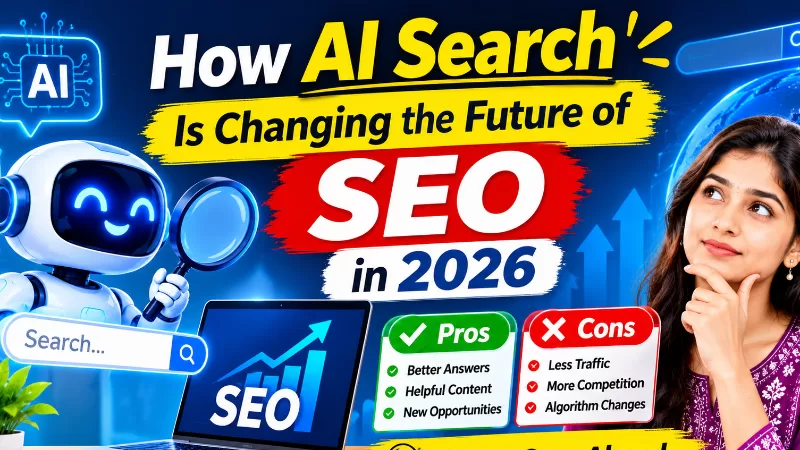
How AI Search Is Changing the Future of SEO
AI Search uses artificial intelligence to help people find and understand information. It allows users to ask questions in natural language and receive answers based on information from different sources.
Traditional search engines usually show a list of websites. Users need to visit those websites to find the information they want.
AI search can make this process easier. It can understand the meaning of a question, look for relevant information, and create a direct answer.
For example, imagine someone wants to start a small online clothing business. They may search:
"What do I need to start an online clothing business?"
A traditional search engine may show articles about business plans, websites, product selection, and marketing.
An AI-powered search tool may explain the main steps in one answer. It may also provide links to websites where the user can learn more.
This saves time and makes information easier to understand.

Now, the way people search is changing.
People can ask questions directly through AI-powered tools like ChatGPT. Google has also introduced AI features, including Google AI Overviews and AI Mode. These features can help users understand a topic by providing information from different sources.
This change is creating new opportunities and challenges for website owners. Some users may find answers without visiting several websites. Others may discover new websites through links included in AI-generated answer.
Does this mean traditional SEO is no longer important? No. SEO is still important, but businesses need to understand how search is changing.
The main goal is no longer just to add keywords to a page. It is to create useful content that answers real questions, builds trust, and helps people make better decisions.
In this article, we will explore how AI search works, how it affects SEO, and what website owners can do to prepare for the future.
What Is AI Search and How Does It Work?
AI Search uses artificial intelligence to help people find and understand information. It allows users to ask questions in natural language and receive answers based on information from different sources.
Traditional search engines usually show a list of websites. Users need to visit those websites to find the information they want.
AI search can make this process easier. It can understand the meaning of a question, look for relevant information, and create a direct answer.
For example, imagine someone wants to start a small online clothing business. They may search:
"What do I need to start an online clothing business?"
A traditional search engine may show articles about business plans, websites, product selection, and marketing.
An AI-powered search tool may explain the main steps in one answer. It may also provide links to websites where the user can learn more.
This saves time and makes information easier to understand.
How AI Understands Questions
AI search does not only look at the exact words a person types. It can also understand the meaning and context of a question.
For example, a user may ask:
"How can I get more customers for my small business?"
Then the user may ask:
"What about using Facebook and Google?"
AI can understand that the second question is connected to the first one. The user is still asking about ways to get more customers.
This makes searching feel more like a conversation.
How AI Finds Information
Some AI search systems use a method called Retrieval-Augmented Generation (RAG). The name may sound difficult, but the idea is simple.
First, the system looks for useful information from available sources. Then it uses that information to create an answer.
Some systems may also use a process called query fan-out. This means breaking a larger question into smaller related searches to collect more useful information.
For example, if someone asks how to improve a website's SEO, the system may look for information about keyword research, technical SEO, content quality, and website speed.
The system can then use relevant information to prepare a more complete answer.
However, AI answers are not always perfect. They may include incorrect or outdated details. Users should check important information from reliable sources.
Traditional Search vs AI Search: What Is the Difference?
Traditional search and AI search have the same basic purpose. Both help people find information. However, they do not always show that information in the same way.
In traditional search, users usually see a list of website links. They choose which website to open and compare the information themselves.
In AI search, users may receive a direct answer created from information found across different sources.
Here are the main differences:

Example: Searching for a Digital Marketing Service
Imagine a business owner wants to hire someone for Google Ads.
They search:
"Google Ads expert for small business"
Traditional search may show agency websites, freelancer profiles, and service pages.
In AI search, the user may ask:
"How do I choose a reliable Google Ads expert for my small business?"
The AI may explain what skills to look for, what questions to ask, and what warning signs to avoid. It may also show relevant websites or service providers.
This changes how businesses need to present their services online.
A service page should not only say what a business offers. It should also explain who the service is for, what problems it solves, how the process works, and why customers should trust the provider.
Traditional search is not disappearing. Many users still prefer to open websites and compare different options. Businesses should prepare for both search experiences.
How AI Search Is Changing the Future of SEO
The growth of AI search is changing several parts of SEO. Website owners need to understand these changes to protect their online visibility and reach the right audience.
1. Website Traffic May Change
For many years, website traffic from Google was a major goal of SEO.A business would try to rank on the first page, attract clicks, and bring visitors to its website.AI search may change this process.
For example, a user searches for "What is SEO?" An AI tool may explain the meaning directly.
The user may not need to open several websites to understand the basic idea.
This can reduce clicks for some simple searches.
However, not every search has the same purpose. A person who wants to understand a basic topic may be satisfied with a short answer. But someone who wants to compare SEO agencies, buy a product, or learn a detailed process may still visit websites.
This means website owners should focus on attracting visitors who need more than a quick answer.They should provide detailed guides, useful examples, service information, product details, and practical solutions.
2. Content Quality Is More Important
Adding keywords to an article is not enough.Content should explain the topic clearly and provide information that helps readers. It should answer the main question and cover important details.
For example, an article about email marketing should not only explain what email marketing means.
It can also cover how to build an email list, write a good subject line, create an email campaign, avoid common mistakes, and measure campaign results.
This gives readers more complete information.
Original examples and real experience can also help a website stand out. If every website publishes the same general advice, readers have little reason to choose one source over another.
3. Search Intent Matters More
Search intent means the reason behind a person's search.
Consider these searches:
- "What is SEO?"
- "How does SEO work?"
- "Best SEO tools"
- "SEO services for small businesses"
All four searches are about SEO, but the users do not want the same information.
The first user wants a definition. The second wants an explanation. The third wants to compare tools. The fourth may be looking for a service provider.
A website should create content that matches each user's needs.
AI search also makes it easier for people to ask detailed questions. They may explain their situation instead of using only two or three words.
For this reason, content writers should understand what people want to know before creating an article.
4. Original Information Can Help a Website Stand Out
Many websites publish similar articles on the same topics.
For example, thousands of websites may have articles about "10 SEO Tips for Beginners."
If an article only repeats common advice, readers may not find a strong reason to choose it.
A better article can include practical examples, personal experience, expert opinions, useful research, or information from real projects.
Imagine two articles about local SEO.
The first explains what local SEO means and lists a few common tips.
The second explains how a local cleaning company can improve its Google Business Profile, organize service pages, collect genuine customer reviews, and attract nearby customers.
The second article gives readers a clearer idea of how to use local SEO in real life.
This type of useful information can make a website more valuable.
5. Trust Is Important for Online Visibility
People want information they can trust.
A website should clearly explain who created its content and where important facts came from. It should also avoid false claims and unsupported statistics.
For example, a digital marketing agency can publish case studies, explain its process, and show real examples of its work.
If it shares results, it should explain what was done and how the results were measured.
This helps readers understand the business and make informed decisions.
Google encourages website owners to create helpful, reliable, people-first content. Trust is not created by adding a few keywords or writing a professional introduction. It grows when a website consistently provides accurate and useful information.
6. Visibility Is Not Only About Ranking
Traditional SEO often focuses on where a page appears in search results.
Ranking is still important. But AI search creates other ways for users to discover information.
A website may be shown as a supporting source in an AI-generated answer. A user may read the answer, notice the source, and visit the website for more details.
This means businesses should think about both rankings and visibility.
They should create content that is easy to understand, accurate, and useful enough to support a topic.
However, there is no guaranteed way to make an AI tool mention a website. Good content and technical SEO can improve eligibility, but they cannot promise a specific result.
What Are AEO and GEO?
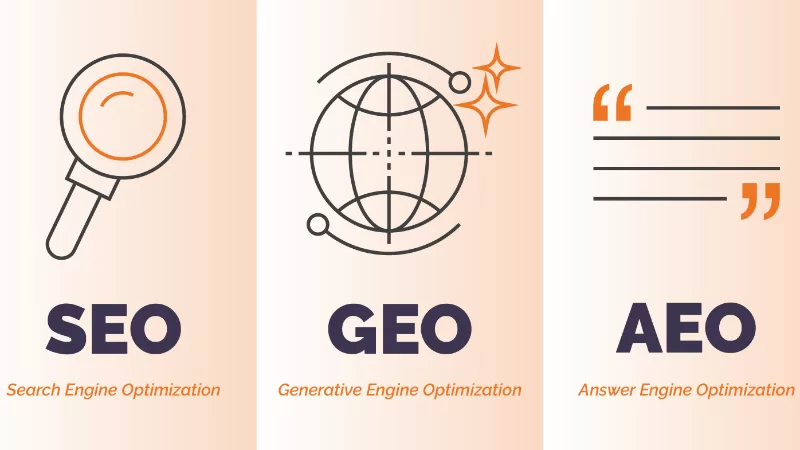
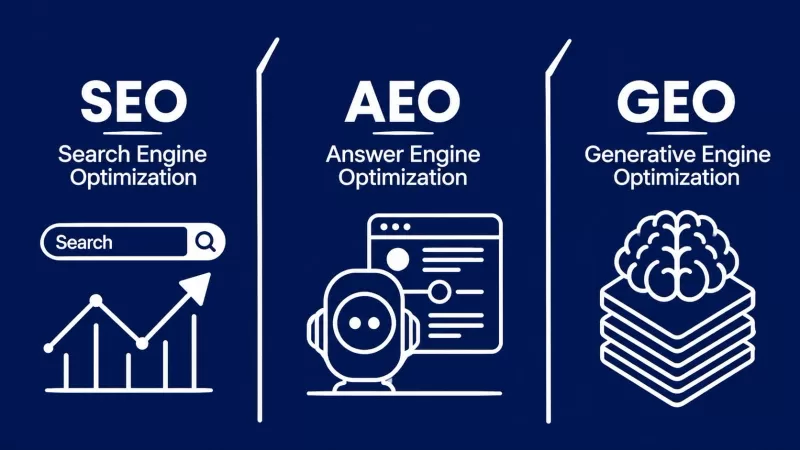
As AI search becomes more common, two terms are getting attention in the SEO industry: Answer Engine Optimization (AEO) and Generative Engine Optimization (GEO).
These terms describe ways of making content useful for systems that provide direct or AI-generated answers.
Answer Engine Optimization (AEO) means creating content that answers people's questions clearly.
For example, a user may search, "What is local SEO?"
A useful answer should explain the meaning directly. It can then provide more details, examples, and steps.
AEO often focuses on clear answers, question-based headings, simple explanations, and relevant information.

Generative Engine Optimization (GEO) focuses on making content useful and understandable for generative AI tools.
For example, a user may ask, "Which digital marketing channels are useful for a new online business?"
An AI tool may discuss SEO, social media, email marketing, and paid advertising. It may use information from different websites to build its answer.
A website that provides clear explanations, reliable information, and useful examples may be a helpful source for such questions.
AEO and GEO are not replacements for SEO. They are related to the wider goal of making useful content easy to find and understand.
Google's guidance also explains that existing SEO practices remain important for its AI search features. Website owners do not need a completely separate set of special rules to appear in Google AI Overviews or AI Mode.
How to Prepare Your Website for AI Search
Preparing a website for AI search does not mean changing everything overnight. You can start with basic SEO practices and improve your content step by step.
1. Understand Your Audience
Before writing content, understand who will read it.Think about their needs, problems, and questions.
For example, a small business owner may want to know how to get more customers without spending too much money.
A useful article could explain affordable marketing methods, local SEO, social media, and email marketing.
You can understand your audience by reading customer questions, checking Google search suggestions, reviewing social media comments, and studying relevant forums.
These sources can help you find real topics to cover.
2. Use Keywords Naturally
Keywords are still important in SEO. They help search engines understand the topic of a page and connect it with relevant searches.
However, keywords should fit naturally into the content.
Use your primary keyword in important places, such as the title, introduction, and a relevant heading. Add related terms where they make sense.
Do not add the same keyword to every paragraph just to increase its frequency. This is called keyword stuffing, and it makes content difficult to read.
The main goal is to use the words your audience naturally uses when searching for information.
3. Create Clear and Helpful Headings
Headings help readers understand the structure of an article. They also help search engines understand the main topics covered on a page.
Use one clear H1 heading for the main topic. Use H2 headings for the main sections and H3 headings when you need to explain smaller points.
For example, an article about AI search may include headings such as "What Is AI Search?", "How AI Search Affects SEO", and "How to Prepare Your Website for AI Search".
Avoid using headings only to add keywords. Each heading should introduce useful information.
4. Answer Common Questions Directly
Your content should provide clear answers to questions related to your topic.
For example, an article about Shopify SEO can answer:
- What is Shopify SEO?
- How do I improve product page SEO?
- How do I write Shopify product descriptions?
- Why is website speed important?
Start each answer with a direct explanation. Then add more details if needed.
This makes the content easier to read and understand.
5. Add Real Examples and Practical Advice
Examples help readers understand how information works in real situations.
Imagine you are writing about SEO for a local cleaning company in Bangladesh.
Instead of only saying "Use local keywords", explain how the business can use a phrase such as "home cleaning service in Dhaka" on a relevant service page.
You can also explain how to create separate pages for different services, add clear contact information, and keep business details updated.
These examples make the advice more useful.
Whenever possible, add real experience or original research. Do not invent customer results, reviews, or case studies.
6. Build Useful Internal Links
Internal links connect one page of your website to another page on the same website.
They help readers discover related information and help search engines find important pages.
For example, an article about SEO basics can link to articles about keyword research, on-page SEO, technical SEO, and link building.
Use clear anchor text so readers understand what they will find after clicking.
Do not add random links just to increase the number of internal links. Each link should be useful.

7. Use Reliable External Sources
External links can support important information in your article.
For example, if you explain Google's AI search features, you can link to official Google Search Central documentation.
If you explain ChatGPT Search, you can use official OpenAI documentation.
Reliable sources help readers check important facts for themselves.
Avoid linking to websites that make unsupported claims or promise guaranteed rankings.
8. Keep Your Website Technically Healthy
Good content is important, but search engines also need to access your website.
Check that important pages are not blocked from crawling, your website has a working sitemap, and important pages can be found through internal links.
Your website should also work well on mobile devices, use HTTPS, and load properly.
You can use Google Search Console to check indexing and technical issues.
Google explains that pages need to be indexed and eligible to appear with a search snippet to be considered for AI Overviews and AI Mode. Even then, inclusion is not guaranteed.
9. Check AI Crawler Access
Different AI services may use different crawlers to discover website content.
For example, OpenAI uses OAI-SearchBot for search discovery in ChatGPT.
Website owners who want their content to be available for ChatGPT search discovery should check that they are not blocking this crawler.
OpenAI also uses GPTBot for a separate purpose related to model training. These crawler settings are independent.
Before changing your robots.txt file, understand what each rule does. A wrong rule can block important crawlers and affect website discovery.
10. Update Old Content and Track Results
Old articles may contain outdated information, broken links, or examples that are no longer useful.
Review your important pages regularly. Check whether the information is still correct and add new details where needed.
After publishing an article, monitor its performance.
Google Search Console can help you review impressions, clicks, search queries, average position, and indexing issues.
Google Analytics can help you understand what visitors do after reaching your website.
Look at which pages attract visitors, which pages lead to enquiries, and where users leave. Use this information to improve your content.
Practical Example: A Bangladeshi Business Preparing for AI Search
Imagine a small clothing business in Dhaka that sells women's clothing online.
The owner wants more customers through Google and AI-powered search tools. The business already has a website, but its product pages contain only short descriptions. The website also has very little helpful content.
What can the owner do?
First, understand customer questions.
The owner can list common questions, such as:
- What types of clothing are available?
- How can I choose the right size?
- What is the delivery time in Dhaka?
- Can I exchange a product?
- How should I care for the fabric?
These questions can guide product descriptions, FAQs, and blog content.
Second, improve product pages.
Each product page should include a clear product name, accurate description, available sizes, fabric details, price, and delivery information.
The description should help customers understand the product. Copying the same description for every product will not provide much value.
Third, publish helpful articles.
The business can publish articles such as "How to Choose the Right Dress Size" or "Simple Ways to Care for Cotton Clothes".
Each article should answer a real customer question.
Fourth, improve website SEO.
The owner should use clear page titles, useful headings, internal links, descriptive image alt text, and relevant keywords.
The website should also work well on mobile devices because many customers use smartphones to shop online.
Finally, build trust and track performance.
The website should show correct contact details, delivery policies, return information, and real product images. Customer reviews should be genuine.
The owner can use Search Console to check which searches bring visitors to the website. Analytics can help show whether visitors view products, contact the business, or complete purchases.
This example shows that preparing for AI search is not only about using new tools. It is about building a website that gives people clear information and a good reason to trust it.

Pros and Cons of AI Search for SEO
AI search brings new opportunities, but it also creates challenges for website owners and digital marketers.
Pros of AI Search
One major benefit is faster access to information. Users can receive direct answers without opening many websites.
AI search also understands longer and more natural questions. This can help users explain what they need and find more relevant information.
Another opportunity is website discovery. AI tools may include links to sources that support their answers. This can help users find websites they may not have discovered through a normal search.
AI search also encourages businesses to improve their content. A website with useful guides, original examples, and clear service information can provide more value to readers.
Cons of AI Search
One concern is the possible loss of website clicks. Some users may get the information they need directly from an AI answer and never visit the original website.
Website owners also have less control over how AI tools summarize their content. An answer may use only part of the information or leave out important details.
Another issue is accuracy. AI tools can sometimes provide incorrect or incomplete answers. This is why important facts should always be checked.
Measuring performance can also be difficult. Traditional SEO tools provide information about search traffic and rankings, but tracking every mention in different AI tools is harder.
Businesses should understand these limitations instead of depending on AI search as their only source of visitors.
Frequently Asked Questions
1. Is SEO still important with AI search?
Yes. SEO is still important because search engines need to find, access, and understand website content.
Google's official guidance says that existing SEO best practices remain relevant for its AI features, including AI Overviews and AI Mode.
Businesses should continue to focus on helpful content, technical SEO, internal links, and a good user experience.
2. Will AI search replace Google?
AI search is changing how people use search engines, but it does not mean traditional search will disappear.
Google is also adding AI features to its search experience. People still need websites for detailed guides, product information, services, research, and many other purposes.
Traditional search and AI-powered search can work alongside each other.
3. What is the difference between AEO and GEO?
AEO stands for Answer Engine Optimization. It focuses on creating clear content that answers people's questions.
GEO stands for Generative Engine Optimization. It focuses on making content useful and understandable for generative AI systems.
Both are connected to the wider goal of improving online visibility through helpful content.
4. How can I make my website visible in AI search?
Start with strong SEO basics. Create original and helpful content, answer common questions, use clear headings, and provide reliable information.
Make sure search engines can access important pages on your website.
For ChatGPT Search, check whether OAI-SearchBot is blocked. For Google AI features, follow Google's existing technical and content guidance.
Remember that no strategy can guarantee a mention in an AI-generated answer.
5. Do keywords still matter in AI search?
Yes. Keywords still help search engines understand what a page is about.
However, repeating the same keyword many times is not a good strategy.
Use the primary keyword in important places, such as the title and introduction. Add related terms naturally where they fit the topic.
Most importantly, write for people instead of forcing keywords into every sentence.
6. Does AI-generated content affect SEO?
AI-generated content does not automatically perform badly in search.
The important questions are whether the content is accurate, useful, original, and created for readers.
Google warns against producing large amounts of low-value content without adding something helpful.
If you use AI for writing, review the facts, improve the examples, add your own knowledge, and make sure the final article provides real value.
Conclusion
How AI Search Is Changing the Future of SEO is not only about new technology. It is about a major change in how people find, understand, and use information online.
Traditional SEO is still important, but businesses need to think beyond rankings and keywords.
They should create helpful content, answer real questions, provide original information, and make their websites easy to use.
AI search also brings challenges, such as possible traffic changes, incorrect answers, and less control over how website information appears.
No one can guarantee a place in an AI-generated answer. But businesses can prepare by following good SEO practices and focusing on the needs of their audience.
The future of SEO will continue to change. Websites that provide accurate, useful, and trustworthy information will be better prepared to meet those changes.

Suggested Image and Alt Text
Image idea: A visual comparison of traditional search results and AI-powered search results, showing how users find information through website links and direct AI answers.
Image Alt Text: How AI search is changing the future of SEO and online search results.
References
- Google Search Central, AI Features and Your Website.
- https://developers.google.com/search/docs/appearance/ai-features
- Google Search Central, Optimizing Your Website for Generative AI Features on Google Search.
- https://developers.google.com/search/docs/fundamentals/ai-optimization-guide
- Google Search Central, Guidance on Using Generative AI Content on Your Website.
- https://developers.google.com/search/docs/fundamentals/using-gen-ai-content
- OpenAI, Overview of OpenAI Crawlers.
- https://developers.openai.com/api/docs/bots
- OpenAI Help Center, Publishers and Developers FAQ.
- https://help.openai.com/en/articles/12627856-publishers-and-developers-faq
OpenAI Help Center, Publishers and Developers FAQ.
Content Note: This article uses publicly available guidance from Google and OpenAI. Examples are provided for explanation. Always check official documentation before making technical changes to your website.
Written by
Nusrat Jahan
Comments (0)
No comments yet — be the first to share your thoughts.