
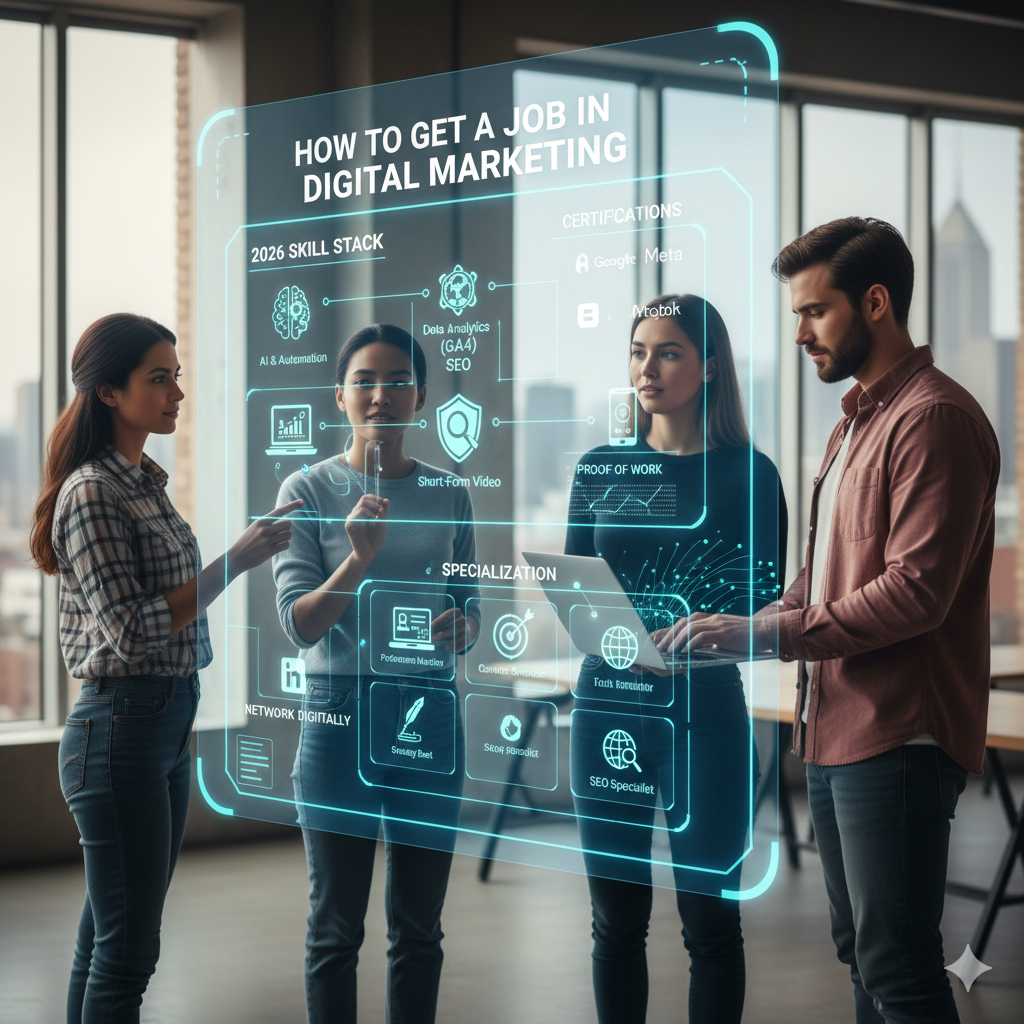
Digital marketing is one of the fastest-growing career fields in the world today. Every business needs an online presence. Because of this, the demand for digital marketers is increasing every year. The good news is that you do not need a traditional degree to start a career in digital marketing. With the right skills, practice, and mindset, anyone can get a job in this field.
In this guide, you will learn step by step how to get a job in digital marketing, even if you are a complete beginner.
What Is Digital Marketing?
Digital marketing is the practice of advertising goods and services online and through digital channels. This includes websites, search engines, social media, dispatch, and mobile apps.
rather of using journals or television advertisements, digital marketers use online tools to reach guests.
Common Types of Digital Marketing
- Search Engine Optimization (SEO)
- Social Media Marketing (SMM)
- Content Marketing
- Email Marketing
- Pay-Per-Click Advertising (PPC)
- Affiliate Marketing
- Influencer Marketing
- Web Analytics
You do not need to master all of these at once. Most beginners start with one or two skills.
Why Choose a Career in Digital Marketing?
Digital marketing is popular for many good reasons.
High Demand
Companies of all sizes need digital marketers. From small businesses to large brands, everyone wants online growth.
No Age or Degree Limit
You can start at any age. Many successful digital marketers are self-taught.
Work From Anywhere
Many digital marketing jobs are remote. You can work from home or even while traveling.
Freelance and Job Opportunities
You can work as a full-time employee, freelancer, or start your own agency.
Step 1: Understand Digital Marketing Basics
Before applying for any job, you must understand how digital marketing works.
Learn the basics:
- How websites work
- What search engines do
- How social media platforms operate
- Why is content important
- How online ads work
At first, strong technical knowledge is not necessary. Focus on understanding the concept.
Step 2: Choose One Digital Marketing Skill to Start
Many beginners fail because they try to learn everything at once. This creates confusion.
Instead, choose one skill and focus on it.
Best Digital Marketing Skills for Beginners
- SEO – Best for long-term growth
- Social Media Marketing – Easy to start and very popular
- Content Writing – Great if you like writing
- Facebook Ads / Google Ads – High demand and good pay
- Email Marketing – Simple and effective
Once you master one skill, learning others becomes easier.
Step 3: Learn Digital Marketing from Free and Paid Sources
You do not need expensive courses to start. There are many high-quality learning platforms available.
Free Learning Resources
- Google Digital Garage
- HubSpot Academy
- Meta Blueprint
- YouTube tutorials
- Blogs from industry experts
Paid Learning Options
- Online courses (Udemy, Coursera)
- Local training institutes
- Mentorship programs
Free resources are enough for beginners. Paid courses can help if you want structured learning.
Step 4: Practice What You Learn
Learning without practice is useless in digital marketing. Employers want skills, not certificates.
How to Practice Digital Marketing
- Create your own website or blog
- Start an Instagram or Facebook page
- Write SEO articles
- Run small ad campaigns
- Optimise social media posts
- Analyse performance using free tools
Even small projects count as experience.
Step 5: Build a Strong Digital Marketing Portfolio
A portfolio shows your real skills. It is more important than your CV.
What to Include in Your Portfolio
- Your website or blog link
- SEO articles you wrote
- Social media pages you managed
- Ads you created (screenshots)
- Analytics reports
- Case studies
If you have no clients, use personal projects. Employers value effort and learning.
Step 6: Learn Basic Tools Used in Digital Marketing
Digital marketers use tools to work faster and better.
Important Tools to Learn
- Google Analytics
- Google Search Console
- Canva
- Facebook Ads Manager
- Google Ads
- Ahrefs or SEMrush (basic understanding)
- Email tools like Mailchimp
You do not need to master all tools. Learn only what matches your skill.
Step 7: Create a Digital Marketing CV
Your CV should be simple and skill-focused.
Tips for a Good Digital Marketing CV
- Highlight practical skills
- Mention tools you can use
- Add project experience
- Include certifications (if any)
- Keep it one or two pages
Avoid long descriptions. Use bullet points and clear language.
Step 8: Optimize Your LinkedIn Profile
Many recruiters search for digital marketers on LinkedIn.
How to Optimize LinkedIn for Digital Marketing Jobs
- Use a professional photo
- Write a clear headline (example: “Junior Digital Marketer | SEO & Content”)
- Add skills and projects
- Share digital marketing posts
- Connect with industry people
A strong LinkedIn profile increases job opportunities.
Step 9: Apply for Entry-Level Digital Marketing Jobs
You do not need to be an expert to get your first job.
Common Entry-Level Job Titles
- Digital Marketing Executive
- Junior SEO Specialist
- Social Media Executive
- Content Marketing Assistant
- Marketing Intern
Apply to many jobs. Rejection is part of the process.
Step 10: Start Freelancing to Gain Experience
Freelancing is a great way to build confidence and income.
Best Freelance Platforms
- Fiverr
- Upwork
- Freelancer
- PeoplePerHour
Start with small projects and low rates. Focus on quality and reviews.
Step 11: Improve Your Communication Skills
Digital marketers work with clients, teams, and managers.
Important Soft Skills
- Clear communication
- Time management
- Problem-solving
- Basic English writing
- Client handling
These skills help you grow faster in your career.
Step 12: Stay Updated with Digital Marketing Trends
Digital marketing changes very fast. What works today may not work tomorrow.
How to Stay Updated
- Follow marketing blogs
- Watch YouTube updates
- Join Facebook groups
- Attend webinars
- Read case studies
Continuous learning is the key to long-term success.
Who Can Start a Career in Digital Marketing?
Digital marketing is open to everyone. There is no fixed rule about who can enter this field. Students, jobholders, business owners, and even homemakers can learn digital marketing.
If you know how to use a computer and the internet, you can start learning digital marketing. You do not need advanced technical knowledge. Basic skills like typing, browsing, and communication are enough at the beginning.
Many people think digital marketing is only for IT students. This is not true. People from arts, commerce, science, and even non-academic backgrounds are working successfully in this field.
The most important thing is your interest and willingness to learn.
Career Growth Opportunities in Digital Marketing
Digital marketing offers strong career growth. When you start, you may work as a junior executive or intern. With time and experience, you can move to higher positions.
Common Career Levels
- Digital Marketing Intern
- Junior Digital Marketer
- Digital Marketing Executive
- Digital Marketing Manager
- Head of Marketing
- Consultant or Agency Owner
You can also specialise in one area, such as an SEO expert, paid ads specialist, or social media strategist. Specialised skills often pay more.
How to Choose the Right Digital Marketing Skill for You
Choosing the right skill depends on your interests and strengths.
If you like writing content marketing, SEO are good choices.
If you enjoy creativity social media marketing and design best for you
If you like numbers and data paid advertising and analytics are better options.
Do not copy others blindly. Choose a skill you enjoy learning. This will keep you inspired for a long time.
Creating a Daily Learning Routine
Many beginners fail because they do not follow a routine. Digital marketing needs consistency.
Simple Daily Routine Example
- 30 minutes learning theory
- 30 minutes of practical work
- 15 minutes reading blogs or updates
Even one hour daily is enough if you stay consistent. Small everyday efforts create significant results over time.
Importance of Real Projects in Digital Marketing
Real projects are the backbone of a digital marketing career. Employers want to see what you can do, not what you studied.
You can create:
- A personal blog
- A Facebook business page
- An Instagram niche page
- A demo ad campaign
- SEO optimization for your website
These projects help you understand real problems and solutions. They also boost your confidence.
How to Write Case Studies for Your Portfolio
Case studies make your portfolio more powerful.
A simple case study structure:
- Problem
- Strategy
- Action
- Result
You can even use small results. For example, increasing page reach or improving website speed. Results do not have to be perfect.
Where to Find Digital Marketing Jobs
Finding the right platform is important.
Best Job Platforms
- LinkedIn
- Indeed
- Company career pages
- Facebook job groups
- Local job portals
Apply regularly. Customise your CV for each role. Do not send the same CV everywhere.
How Freelancing Helps Your Career Growth
Freelancing improves your skills faster. You learn client communication, deadlines, and problem-solving.
Even one small project adds value to your profile. Freelancing also helps you understand pricing and client expectations.
Many full-time marketers started their careers as freelancers.
Common Mistakes Beginners Should Avoid
Many beginners fail due to simple mistakes.
Avoid These Mistakes
- Learning without practice
- Depending only on certificates
- Trying to master everything at once
- Giving up too early
- Not building a portfolio
Success takes time. Be patient.
How Long Does It Take to Get a Job in Digital Marketing?
This depends on your effort and learning speed.
- 1–2 months: Basic understanding
- 3–4 months: Skill practice
- 5–6 months: Portfolio + job applications
Some people get jobs faster. Some take longer. Consistency matters most.
Salary Expectations in Digital Marketing
Salary depends on skill, location, and experience.
Beginner Level
- Entry-level jobs: Moderate salary
- Freelancing: Depends on projects
Experienced Level
- Higher salary
- Remote jobs
- International clients
Skills increase income, not degrees.
Challenges You May Face as a Beginner
Every career has challenges. Digital marketing is no exception.
Common Challenges
- Slow progress at the beginning
- Confusing information online
- Low confidence
- Rejections in job applications
These challenges are normal. Do not quit early. Skills improve with time and practice.
Final Thoughts
Getting a job in digital marketing is possible for anyone who is willing to learn and practice. You do not need a special degree or years of experience. You need skills, patience, and consistency.
Start small. Choose one skill. Practice daily. Build a portfolio. Apply confidently.
Digital marketing is not just a job. It is a long-term career with endless opportunities.
If you begin now, your future self will thank you.
Frequently Asked Questions (FAQs)
1. Can I get a digital marketing job without experience?
Yes. Many beginners get jobs without prior experience. You need practical skills, a basic portfolio, and hands-on practice. Personal projects also count as experience.
2. Do I need a degree to work in digital marketing?
No. A degree is not required. Most employers care more about your skills, tools knowledge, and results than your academic background.
3. How long does it take to learn digital marketing?
You can learn the basics in 1–2 months. With regular practice, you can become job-ready in 4–6 months. Learning speed depends on your effort and consistency.
4. Which digital marketing skill is best for beginners?
SEO, social media marketing, and content marketing are best for beginners. These skills are easy to start and have high demand in the job market.
5. Is digital marketing a good career choice?
Yes. Digital marketing offers high demand, career growth, remote work options, and freelance opportunities. It is one of the fastest-growing career fields today.
6. Can I work from home as a digital marketer?
Yes. Many digital marketing jobs are remote. Freelancing and remote full-time roles are very common in this field.
7. How much can a beginner earn in digital marketing?
Beginner earnings depend on skills and location. Entry-level jobs pay a basic salary, while freelancers can earn based on projects. Income grows with experience.
8. Is digital marketing hard to learn?
No. Digital marketing is easy to learn if you start step by step. It does not require advanced math or coding skills. Regular practice makes it easier.
9. Which tools should I learn first?
Start with Google Analytics, Google Search Console, Canva, and basic social media tools. Learn advanced tools later based on your specialisation.
10. Can I learn digital marketing for free?
Yes. Many free courses are available from Google, HubSpot, Meta, and YouTube. Free resources are enough to start a career in digital marketing.
11. Is freelancing better than a job in digital marketing?
Both are good options. Jobs provide stability and learning. Freelancing offers flexibility and higher income potential. Many people do both.
12. How do I apply for my first digital marketing job?
Create a simple CV, build a portfolio, optimize your LinkedIn profile, and apply for entry-level roles. Practice interview questions and show confidence.
13. What mistakes should beginners avoid?
Avoid learning without practice, skipping portfolio building, and expecting quick success. Digital marketing requires patience and continuous learning.
14. Is digital marketing future-proof?
Yes. As businesses move online, the demand for digital marketers continues to grow. Skills may change, but opportunities will remain strong.
15. Can students start a career in digital marketing?
Yes. Students can start learning digital marketing while studying. Many students work as interns or freelancers and build careers early.
