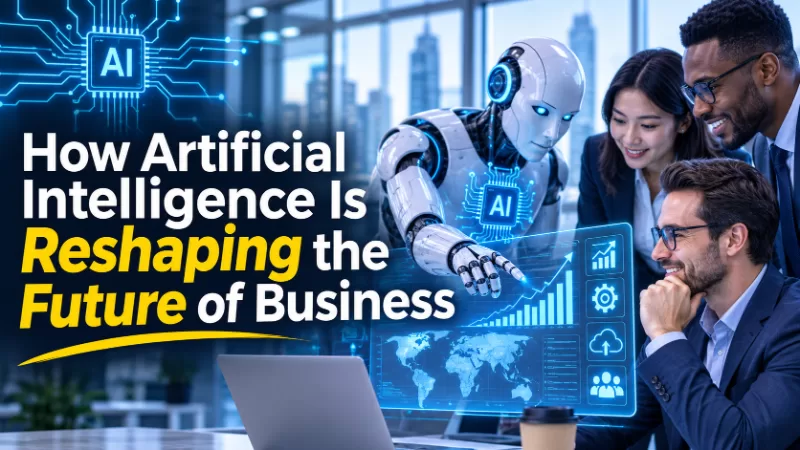
Artificial intelligence (AI) is technology that lets computers learn from data and make smart decisions. Today, Artificial intelligence in business is no longer limited to large corporations. Companies of every size use AI to save time, cut costs, and understand customers better as digital transformation changes how organizations compete and grow in a fast-changing market.
In modern business, AI acts as a smart assistant that handles complex tasks quickly and accurately. It analyzes data in seconds, supports better decisions, and removes repetitive work, so teams can focus on creativity and strategy. The result is a more efficient, productive, and flexible organization.
Intelligent Automation in Business
Intelligent automation combines AI with automated workflows to handle invoicing, scheduling, and inventory tracking. Unlike basic automation, it learns from data and improves over time, reducing costs and errors while speeding up daily operations.
Business Intelligence Tools and Data-Driven Decisions
Business intelligence tools use AI to turn raw data into clear dashboards and forecasts. Managers can spot trends, track performance, and make confident decisions without waiting for lengthy manual reports, which keeps the whole company focused on what truly matters.

How AI Improves Customer Experience
Customer experience is a key advantage, and AI makes it better. Faster support, smarter recommendations, and personalized service help businesses build trust, raise satisfaction, and keep customers coming back.
Chatbots answer questions at any hour, track orders, and solve simple problems instantly, lowering support costs and freeing human agents to handle complex issues.
AI in E-commerce
AI in e-commerce powers product recommendations, dynamic pricing, and fraud detection. By studying browsing habits and past purchases, online stores show shoppers exactly what they want, which increases sales and reduces abandoned carts.
AI in Digital Marketing
Platforms such as Facebook Ads and Google Ads use AI to choose audiences, set bids, and test creative ideas automatically. Marketers study customer behavior in real time and adjust campaigns quickly, improving return on investment and supporting steady growth.
Benefits of AI for Small Businesses
AI for small businesses is now affordable. Ready-made tools handle bookkeeping, customer messages, and social media content for a low monthly cost. Small teams can compete with larger brands without hiring extra staff or building complex systems.
Challenges and Risks of AI in Business
AI also brings challenges. Setup can be costly, employees need new skills, and poor data quality can cause mistakes. Without careful planning, weak security and overreliance on automation may damage customer trust, so leaders should start small, test carefully, and train their teams.
Data Privacy and Security
AI depends on customer data, so companies must follow privacy laws, use strong security, and be transparent about how information is used.
The Future of Human-AI Collaboration
Human-AI collaboration will define the next stage. AI handles data and repetitive tasks, while people provide creativity, ethics, and empathy. Together, they achieve better results than either could alone.
Conclusion
Artificial intelligence is reshaping business by automating tasks, improving customer experience, and strengthening decisions. Challenges like privacy and limitations can be managed with planning and human oversight. Businesses that embrace AI wisely today will be ready to innovate and grow tomorrow.
Written by
Shumi Akter
Comments (0)
No comments yet — be the first to share your thoughts.