
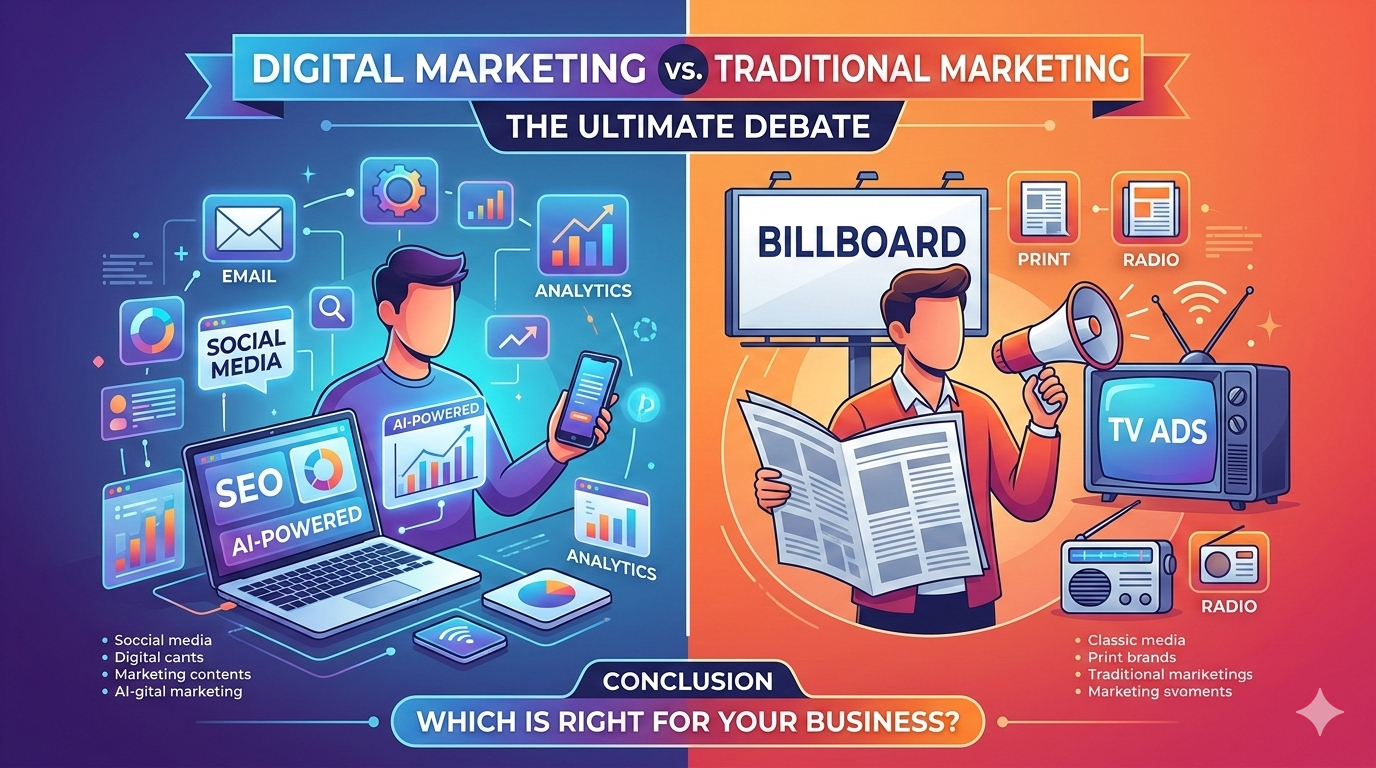
In 2026, the big question isn’t whether digital or traditional marketing is “better.” Instead, it’s about how to use both to get the attention of busy people. Online ads are very clever today. They use AI to show you exactly what you like. But “old” ways of advertising, like posters and mail, are becoming popular again.
Why this is happening:
Online ads are smart, but there are so many of them that people stop looking. Old-fashioned ads (like a letter in your mailbox) feel special because you can touch them. This is because many people are tired of staring at screens. They are looking for “real-world” experiences that feel honest and trustworthy.
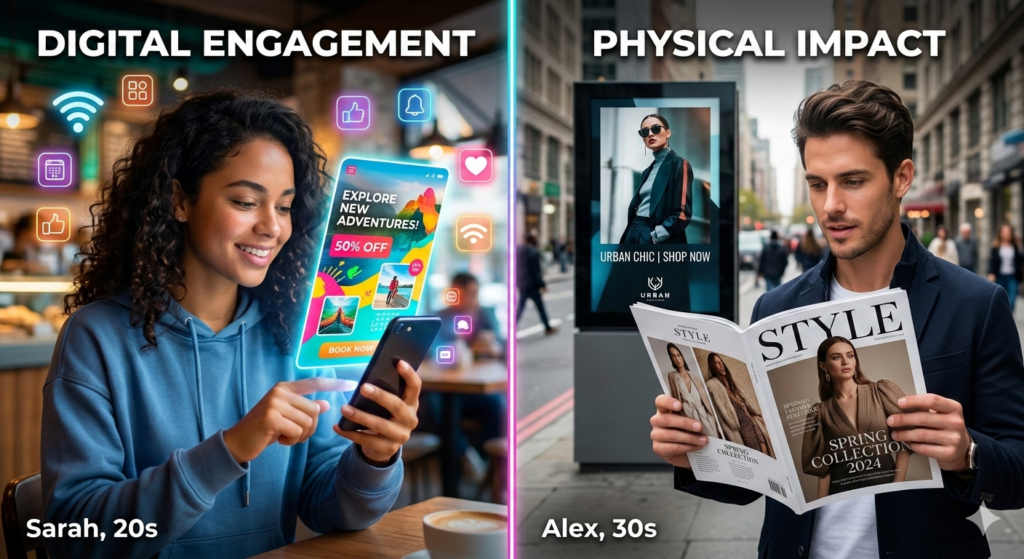
Whether you are starting a new business or you are a marketing expert, you need to understand how these two big types of marketing work. This is the only way to build a brand that stays strong and grows.. This paper goes into the history, workings, and future of marketing to make you make your way through the dynamics of the present day.
Marketing elaboration preface
What Is Marketing?
Marketing is simply the art of connecting people who have a problem with the solution they need.
It is not just about selling things or showing ads. Instead, it is about understanding how people think and giving them something useful at exactly the right time. Today, just “being seen” isn’t enough. Your brand needs to be an expert and truly helpful.
If your business doesn’t solve a problem or give people a great experience, they will simply ignore you like background noise.
The way marketing evolved over time
One can see the history of marketing as a reflection of the technological progress.
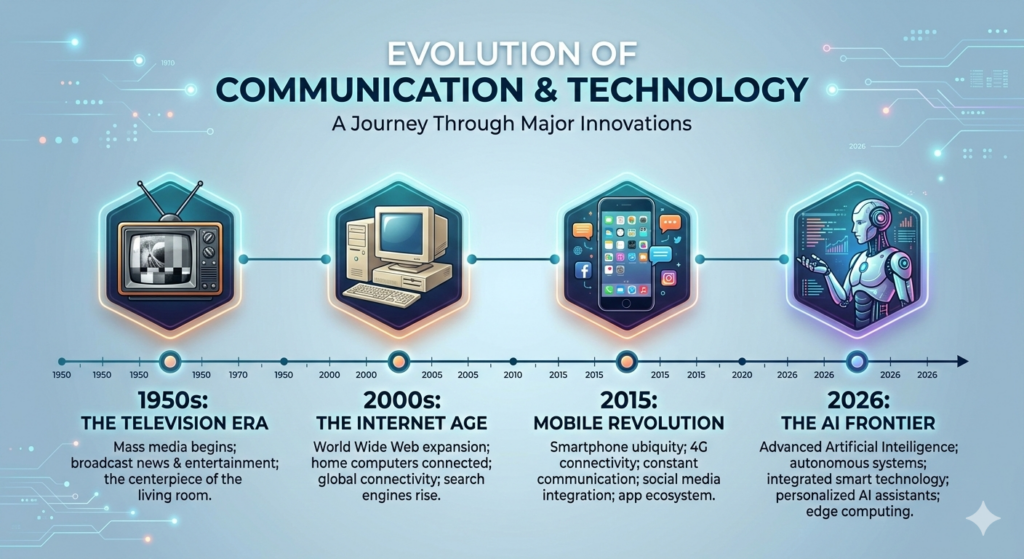
The Age of Mass Broadcast( 1950s- 1990s):
It was one- way business in marketing. Brands talked to as numerous people as possible using television, radio, and journals hoping that they would hit.
From 2000 to 2010, the internet changed everything. For the first time, brands and customers could actually talk to each other, not just listen.. Using social media and search engines (SEO), companies could find people with specific hobbies. This was something they couldn’t do before.
2015 to 2023 (The Age of Data): Companies started using “Big Data” to be incredibly exact. They could show ads to the perfect person at the perfect time. Because of this, Google and Meta (Facebook) became the most powerful names in advertising.
Digital Marketing vs Traditional MarketingDigital Marketing vs Traditional Marketing
Learning about Traditional Marketing
Traditional marketing is just a fancy way of saying “the old-school way.” It refers to the methods companies used long before the internet became popular.
Basically, these are ads you see in the real world rather than on a screen. Traditional marketing is “interruptive.” This means it pops up and catches your eye while you are busy doing other things.
It basically “breaks into” your day to show you something new.
Common Examples:
- Seeing a big billboard while you are driving your car.
- Watching a TV commercial in the middle of a football game.
- Hearing an ad on the radio while you are listening to music.
Even in 2026, this style is still very important. People tend to trust it more, and it creates big “shared moments” (like a famous Super Bowl ad) that everyone experiences at the same time.
Popular Conventional Marketing Media
Print Media
Even though people have been saying “print is dead” for twenty years, fancy magazines and physical mail are actually making a big comeback.
Digital ads disappear in a second, but a high-quality catalog or a local newspaper ad feels permanent. It is something you can actually hold in your hands. This works especially well for older groups like Gen X andBaby Boomers. In fact, many people say they enjoy getting a nice piece of mail much more than opening an email inbox full of junk.
Television Advertising
In 2026, TV ads work in two different ways:
Traditional TV: This is the normal TV we have watched for years, where shows play at a set time.
Smart TV (Connected TV): This is when you watch shows through the internet on a streaming app.Smart TV ads are good because they can show you items they know you already like. However, Traditional TV is still the best way to make a big company famous. Big events, like the Super Bowl or live sports, are the only times a brand can talk to 100 million people at the exact same time.
Why TV Still Matters:
Big Crowds: It is the only way to reach millions of people at once.
Trust: People usually feel that brands on TV are “bigger” and more successful.
Live Events: Sports are one of the few things people still watch live instead of recording for later.Radio Advertising
Radio has transformed into a combination of local radio and digital radio. Nevertheless, the old fashioned local radio spot is still a giant to local businesses. It catches commuters when they are at the drive time – a captive audience that is not scrolling over an advertisement but actually listening to it.
Outside Advertising (bills, flyers)
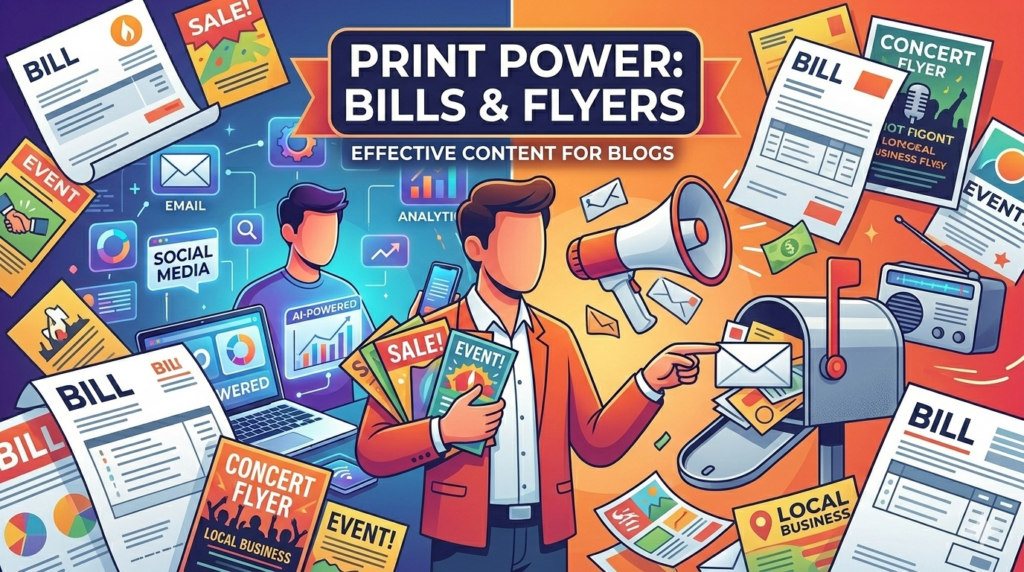
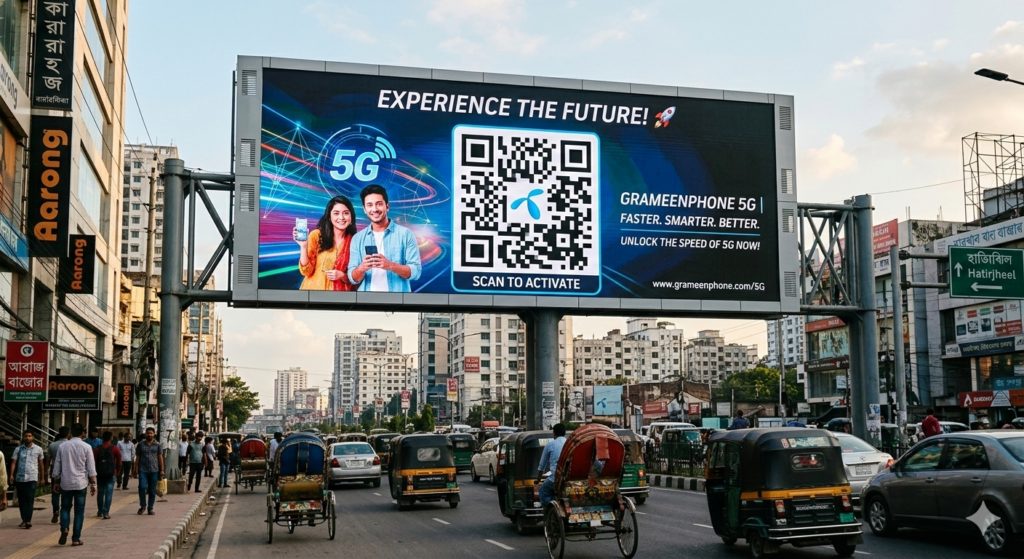
Out-of-Home (OOH) advertising has been made smarter yet traditionally basic. It can be a massive billboard in the Times Square or a flyer posted in a community center on the outskirts, OOH can never be blocked. It is not possible to insert an ad-blocker onto a real-life billboard. These in 2026 tend to be combined with QR codes or Augmented Reality (AR) triggers, closing the physical-digital divide
Knowing Digital Marketing
Digital marketing means using the internet or electronic devices to sell things. This includes using Google, social media, email, and websites to find and talk to customers.
The biggest difference is that digital marketing is a two-way conversation. Customers can talk back to the brand. Also, companies can see exactly what is happening right now by looking at live data.
Digital Channels of Marketing that are popular
Search Engine Optimization (SEO)
The largest transformation of SEO has ever taken place. Generative Engine Optimization (GEO) is discussed in 2026. In the past, the goal was to be the very first link on Google. Now, things have changed because of AI.
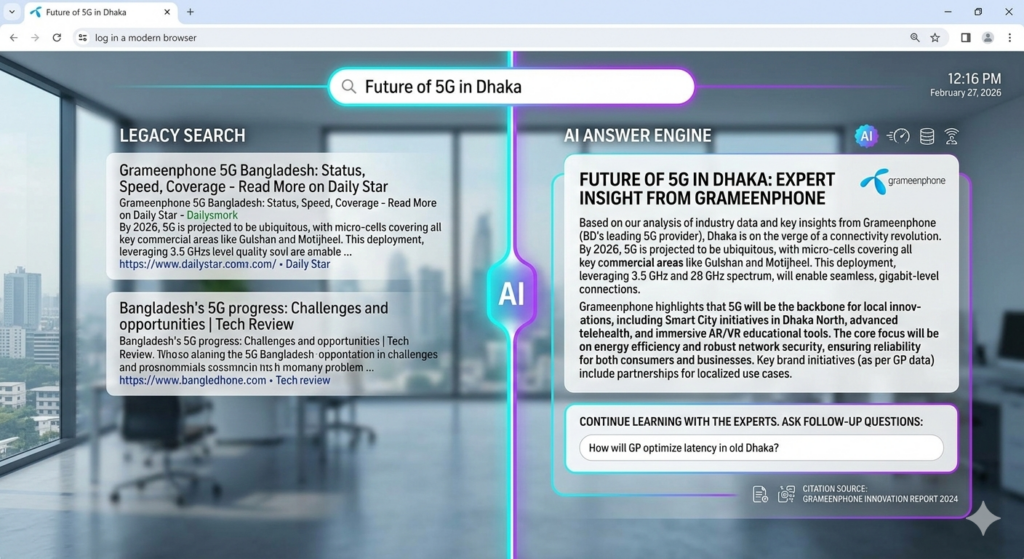
When you ask an AI a question, it reads many websites and writes a summary for you. Today, the goal is to be the expert source that the AI picks to use in its answer.
Social Media Marketing
Social media has ceased to be a matter of likes. It is now one of the main search engines among Gen Z and Gen Alpha. Product discovery takes place in platforms such as Tik Tok ,Facebook and Instagram. The art of influencer marketing has also evolved, leaving behind the so-called mega celebrities in favor of micro-experts who enjoy enjoyment of true credibility in a niche audience.
Email Marketing
Email is one of the best ways to make money online. Why? Because you own your list of contacts.
By 2026, social media has become harder to use and ads have become very expensive. Because of this, companies are going back to “owned” channels like email and text messages. Today, emails are very personal. Many companies even use AI to figure out the exact minute you are most likely to open and read your mail.
Why Email Works:
• Total Control: You don’t have to worry about a social media app changing its rules.
• Cheaper: It costs very little to send an email compared to buying an ad.
• Smart Timing: AI helps make sure the email hits your inbox right when you are looking at your phone.
Content Marketing
The adage Content is King is an ancient saying that is no longer true, but the medium has shifted. Content marketing, in the year 2026, is concerning utility. Brands are building interactive, AI driven calculators, and in-depth video chains that are valuable instead of merely trying to sell a product.
Pay-Per-Click Advertising (PPC).
With PPC, the brands can purchase their place in the search results or social feeds. PPC in 2026 is nearly fully automated under AI systems, known as Auto-Bidding. Today, marketers don’t have to change every little detail or keyword by hand anymore. Instead, they just give the computer good pictures and clear goals. After that, the AI does the hard work for them.
Basic differences between Digital Marketing and Traditional Marketing.
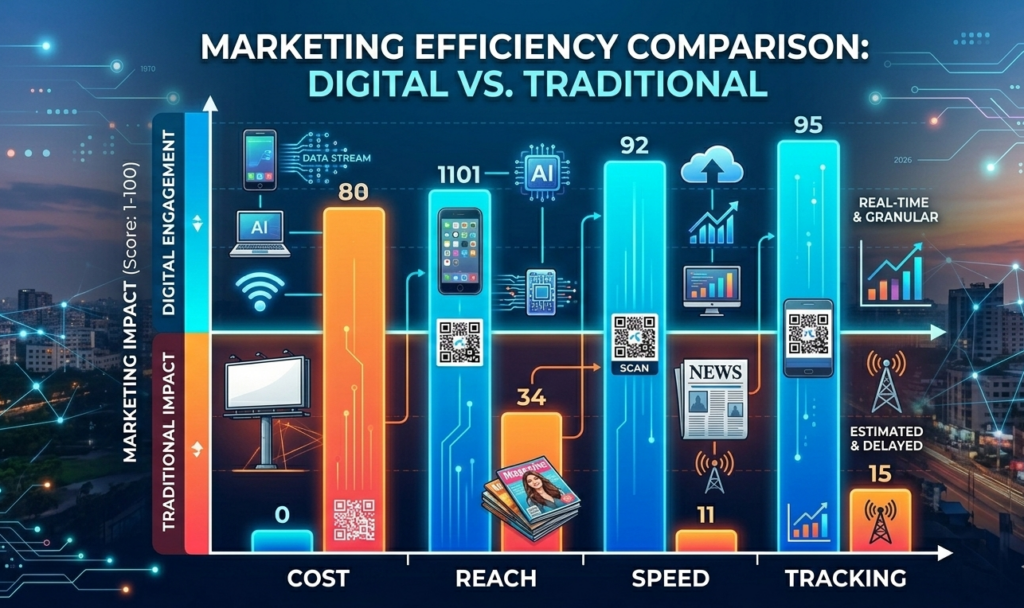
The only way to select the appropriate strategy is to know how these two worlds are in conflict and complementary.
Cost Comparison
Traditional: This is generally expensive to start. Purchasing a billboard or 30-second TV spot is a costly and inaccessible activity to a small business.
Digital: Has a pay-as-you-play model. In order to begin a Meta ad, you will require five dollars a day. Nonetheless, in 2026, digital “Cost-Per-Click” (CPC) has gone up by almost 40% in certain areas, and it is not as much of a bargain as it was previously.
Target Audience Reach
Traditional:
Traditional is the best in terms of broad reach. When you are selling bread, everyone is your customer hence a billboard will do. It is superb when it comes to saturation of the local market.
Digital:
Best for “niche” reach. In case you are selling “eco-friendly left-handed gardening shears,” you can locate those 5,000 people in the world; with digital, you can locate them.
Engagement and Interaction
Text, conventional: One-way communication. The consumer listens (or ignores) the brands speaking.
Digital: Two-way communication. With one click, consumers are able to comment, share, complain or buy.
Analytics and Measurability
Traditional: Estimations. The number of cars that passed by a billboard you know, but not how many people actually read it and purchased the product due to it.
Digital: Precision. You know the number of people who saw the ad, the length of time that they spent viewing the video and the exact route that they followed to make a purchase.
Speed and Flexibility
Traditional: Slow. When you print and hang a billboard, you cannot make a correction or get prices updated immediately.
Digital: Instant. In case an advert is not working on time at 10:00 AM, you can change the image to 10:05 AM.
The benefits of Traditional Marketing
Tangibility and Trust
It is a psychological fact that physical things are more authentic and credible. Ads placed on an entire page of a well-known newspaper stem with a certain degree of legitimacy that a social feed sponsored post usually does not have. With premium products (cars, luxurious watches, property), conventional media assists in creating the pre-eminence of the brand.
Local Market Penetration
In the case of a local plumber or a local bakery, traditional marketing may be more useful. An advert at the right spot at the gym in the area or a sign on the side of a bus will reach the individuals right at the places they are staying and working.
Brand Recognition
Conventional marketing is outstanding in terms of awareness at the top of the funnel level. It creates an unconscious association with a brand across the years. Consider popular brands such as Coca-Cola or Nike their brand was made on the shoulders of huge, conventional OOH and TV campaigns.
The benefits of Digital Marketing
Global Reach
An adolescent in Tokyo and a retired person in London can view the same digital advertisement simultaneously. Digital marketing eliminates geographical boundaries, and small businesses can compete internationally.
Cost-Effectiveness
Digital marketing will decrease wastage because of the granular targeting. You are not going to pay to place your steakhouse ad in front of a vegan; the algorithm will make sure he or she only spends money on the most likely people to convert.
Live Monitoring of the performance.
Attribution Modeling is the tool used by 2026 marketers to look at all touchpoints. Digital analytics would allow following a specific trail should a customer view a TikTok, then send an email, then Google before making a purchase.
Individualization and Robotization.
AI has become capable of segmentation of one. This implies that all customers get a slightly different version of a site or a mailed email depending on how they had behaved in the past. Traditional marketing can just not attain this level of relevance.
Shortcomings of Traditional Marketing.
High Costs
The entry barrier is also high. A one-time advertisement that runs during prime time may eat up the whole yearly marketing budget of many small-to-medium enterprises (SMEs).
Limited Tracking
Although QR codes have assisted, determining the ROI of a billboard is still hard. This renders it hard selling among data driven boards of directors who would seek to ensure that no dollar is wasted.
One-Way Communication
The conventional marketing does not give any immediate feedback mechanism. When either a campaign is offensive or misinterpreted, the brand may not even come to know until it is too late.
Digital Marketing is limited in the following ways.
Dependence on Technology
A digital-only business can lose its traffic overnight in case the algorithm of a platform (as was the case with the Helpful Content Update of the years gone by) changes or experiences a colossal data outage.
High Competition
The obstacle to entry is minimal that everybody is doing it. This has created a phenomenon of digital ad fatigue where consumers have learned to screen out all that appears to be an advertisement.
Privacy and Data Concerns
The digital targeting has been complicated because of the 2024-2025 so-called death of the third party cookie and more stringent privacy regulations throughout the world (GDPR, CCPA, etc.). It has forced marketers to now put extra effort into acquiring so-called first-party data (the information provided voluntarily by the user).
Digital vs. Traditional Marketing Which Is better?
The short answer? Neither. The long answer? It is based on your objectives, your target and your budget.
Factors to Consider
Target Audience: Where will they spend their time? When you are aiming at the Gen Z generation, you have to put a TikTok-first approach. A print journal or LinkedIn that is of high quality would be better in case you are targeting the C-suite executives.
Product Type:
Is the product of discovery (something they did not know they needed) or a product of search (something they are in search of)?
Budget: If you have $500, go digital. If you have $500,000, use a mix.
Industry-Specific Use Cases
E-commerce: It is nearly all digital, and some unboxing experience (often physical touchpoints).
Lawyers and Doctors: People need to trust these services, so they use “old” ads like radio or billboards to show they are a real, local business. Then, they use digital tools (like Google search) so that when you type “lawyer near me,” their name pops up first.
Luxury Goods: A “Print-First” approach toward exclusivity, then “Digital-Retargeting.”
Small Businesses vs Large Companies.
Digital for Growth and Traditional for Community should be the priorities of small businesses. Big businesses can afford to employ large business brand equity, and digital performance.
Integrated Marketing: The Better of the Two Evils.
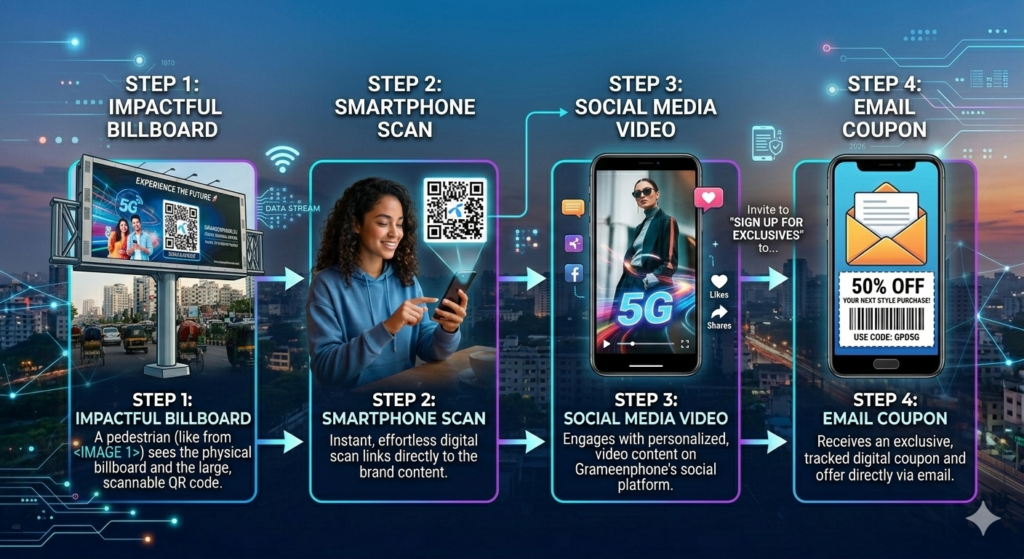
What Is integrated marketing?
Think of a hilarious advertisement of a new beverage. The billboard has a QR code. You scan it, and this brings you to an AR experience on Instagram. You subscribe to the brand, and two days after, you receive an individual discount code in your mail. This incorporates marketing.
Cases of Hybrid Marketing Strategies.
The CeraVe “Michael Cera” campaign was a perfect example of how to mix old and new marketing.
First, they used the internet to spread a funny rumor. They shared “leaked” photos and worked with social media stars to make people wonder if the actor Michael Cera actually created the brand.
Then, they finished the story with a huge TV ad during the Super Bowl. This mix of online rumors and a big TV commercial worked so well that people viewed it 32 billion times.
Ikea Kreativ AI: They have classic catalogs, however, they also have scannable pages that open an AI app on your phone to see Ikea furniture in your room.
Future of Marketing
Role of AI and Automation
By the end of 2026, we expect “Agentic Marketing” to be the normal way of doing things.
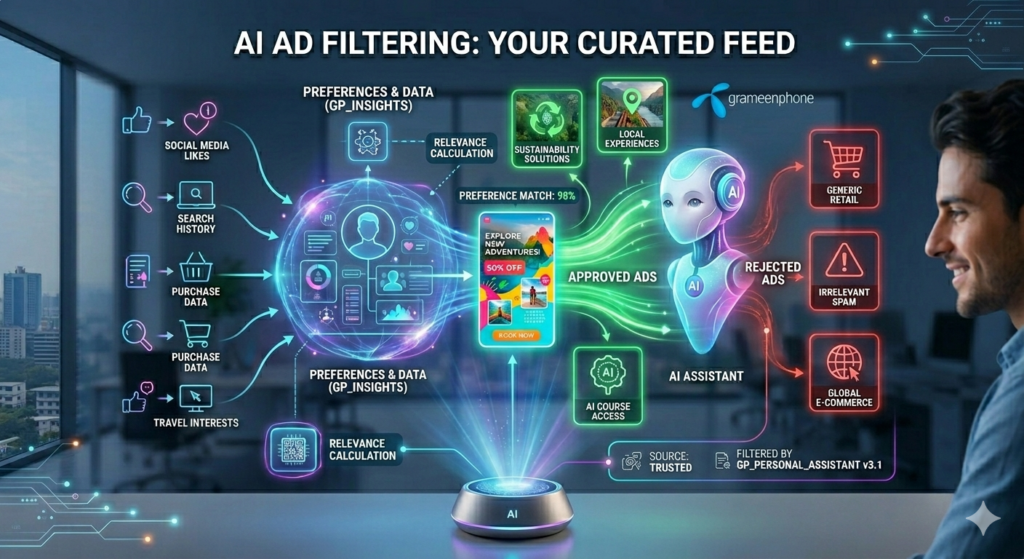
This means companies won’t just make ads for people; they will make them for AI assistants, too. Most people will use an AI to help manage their lives and block out junk. Your personal AI might say: “I found three pairs of shoes that you will like at a store nearby. Do you want to see them?”
Fading or Death of the old-fashioned Marketing.
Old-school marketing isn’t dying—it is becoming “premium.”
Today, the internet is flooded with “AI-slop” (cheap, low-quality content made by machines). Because there is so much junk online, people value high-quality things more. A beautiful, hand-edited magazine or a great TV commercial feels more special and worth more than ever before.
Conclusion
The Digital vs. Traditional war is in the past; the Omnichannel Synergy has come into existence. The traditional marketing gives the soul and trust of a brand, whereas the digital marketing gives the nervous system and data. To be successful in 2026, you have to quit operating them as different silos. Create your brand with the digital reach and stick with the traditional touch.
Commonly Asked Questions (FAQs).
Question: Will marketing traditionalism be relevant in 2026?
Answer: Absolutely. Actually, people trust old-fashioned ads (like those in magazines, on TV, or on the radio) more than social media ads right now. This is because many people are tired of seeing too many ads online and are worried about how websites use their private information.
Question: Digital or traditional, which one is cheaper?
Answer: The cost of entry is lower in digital, whereas effective digital marketing is getting quite costly due to the rising competition. Conventional marketing is expensive to start but has the potential to be less on a cost per thousand (CPM) of mass-market products.
Question: Are small businesses able to afford hardcore marketing?
Answer: Yes, if they think locally. For small local businesses, things like radio ads, helping out at town events, or handing out flyers are usually cheap. These methods work really well because they help you reach people who live right in your neighborhood.
Question: How has AI changed SEO in 2026?
Answer: General Engine Optimization (GEO) has replaced SEO. Instead of just using a few simple keywords, marketers now focus on providing clear, expert information. They organize this data so that AI “answer engines” can easily understand it and recommend it to people.
Question: What is the Third-Party Cookie and why are we concerned?
Answer: The tracking of the users over the web was done using third-party cookies to target them. Since digital tracking is going away, companies now have to rely on information they collect themselves. It has also made “old-school” advertising popular again—like putting an ad in a specific magazine that fits the topic.
Digital Marketing for Business Growth 2026

2 comments
This was beautiful Admin. Thank you for your reflections.
[…] Digital Marketing vs Traditional MarketingIt is moving into a predictive marketing era. Now AI is able to study gigantic volumes of data toguess what a customer desires even before they are aware of their desire. Small teams can runlarge, international campaigns with little manual effort by automating them. […]