
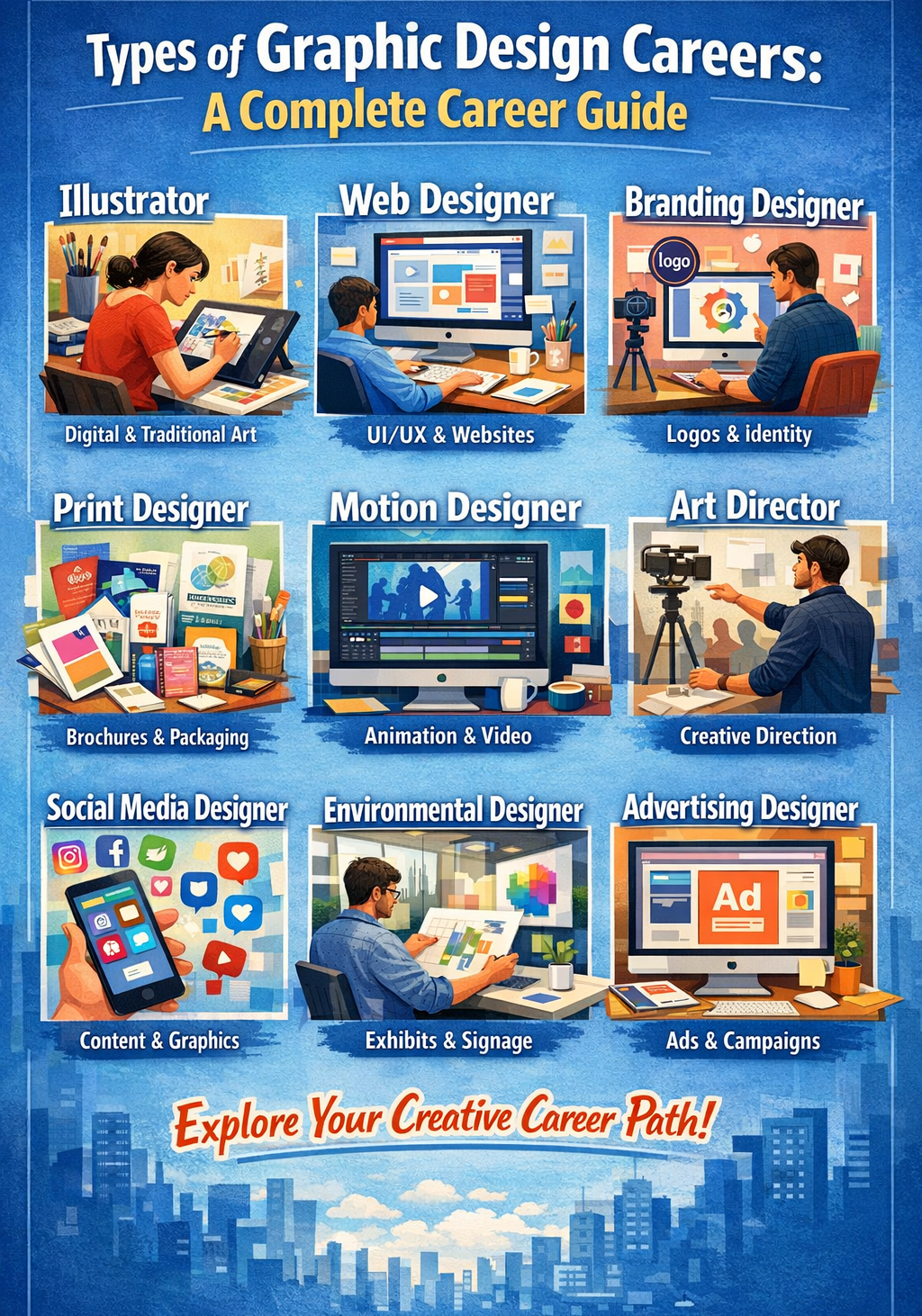
Graphic design is one of the most popular creative careers in the digital world. Almost every business needs visual content. From logos to websites, from social media posts to mobile apps, graphic designers play a key role everywhere.
In this guide, you will learn about all major types of graphic design careers, what they do, required skills, tools, salary potential, and career growth.
What Is Graphic Design?
The art of visual communication is known as graphic design. Designers use images, colors, typography, and layout to deliver messages clearly and attractively.
Graphic designers work on:
- Branding
- Marketing materials
- Digital products
- Print media
- User interfaces
- Motion graphics
Graphic design combines creativity and problem-solving.
Why Choose a Career in Graphic Design?
Graphic design is a strong career choice because:
- High demand across industries
- Freelance and remote work options
- Creative freedom
- Continuous learning
- Global job opportunities
You can work with startups, agencies, big brands, or even as a freelancer.
Skills Required for Graphic Design Careers
Before choosing a specific career type, you need basic graphic design skills.
Core skills include:
- Creativity and visual thinking
- Color theory
- Typography
- Layout and composition
- Communication skills
- Time management
Popular design tools:
- Adobe Photoshop
- Adobe Illustrator
- Adobe InDesign
- Figma
- Canva
- After Effects (for motion)
Types of Graphic Design Careers
Now let’s explore the most popular and in-demand graphic design career paths.
1. Visual Identity Designer (Brand Designer)
Visual identity designers focus on branding. They create the visual elements that represent a brand.
What they do:
- Design logos
- Create brand color palettes
- Choose typography
- Develop brand guidelines
Where they work:
- Branding agencies
- Marketing agencies
- Startups
- Corporate brands
Required skills:
- Branding strategy
- Logo design
- Color psychology
- Typography
Career growth:
Junior Brand Designer → Senior Brand Designer → Creative Director
2. Logo Designer
Logo designers specialize in creating logos that represent businesses or products.
What they do:
- Research brand identity
- Sketch logo concepts
- Create vector logos
- Deliver brand-ready files
Tools used:
- Adobe Illustrator
- CorelDRAW
Work type:
Mostly freelance or agency-based
Why this career is popular:
- High demand
- Short project timelines
- Strong freelance income potential
3. Marketing & Advertising Designer
These designers create visuals for promotions and ads.
What they do:
- Design posters and flyers
- Create social media graphics
- Design ad banners
- Create campaign visuals
Where they work:
- Advertising agencies
- Digital marketing agencies
- In-house marketing teams
Skills needed:
- Marketing understanding
- Creativity
- Fast design execution
4. Social Media Graphic Designer
This role focuses only on social media visuals.
What they do:
- Instagram posts and stories
- Facebook ads
- YouTube thumbnails
- Carousel designs
Why it’s in demand:
Social media marketing is growing fast.
Tools used:
- Canva
- Photoshop
- Figma
Career advantage:
- Easy entry for beginners
- High freelance demand
5. UI Designer (User Interface Designer)
UI designers focus on how digital products look.
What they design:
- Website layouts
- Mobile app screens
- Buttons and icons
Tools used:
- Figma
- Adobe XD
- Sketch
Skills required:
- Design systems
- Grid layouts
- Mobile-first design
UI design is one of the highest-paying graphic design careers.
6. UX Designer (User Experience Designer)
UX designers focus on how users feel when using a product.
What they do:
- User research
- Wireframing
- User flow design
- Usability testing
Difference between UI and UX:
UI = how it looks.
UX = how it works
UX designers earn higher salaries due to strategic value.
7. Web Designer
Web designers create visually attractive websites.
Responsibilities:
- Website layout design
- Responsive design
- Basic HTML/CSS knowledge
- Collaboration with developers
Tools used:
- Figma
- WordPress
- Webflow
Web designers are in high demand for business websites.
8. Motion Graphic Designer
Motion graphic designers create animated visuals.
What they design:
- Animated ads
- Explainer videos
- Logo animations
- Social media reels
Tools required:
- Adobe After Effects
- Premiere Pro
Industries:
- Media agencies
- YouTube channels
- Advertising companies
9. Illustration Designer
Illustrators create custom drawings and artwork.
What they do:
- Digital illustrations
- Book illustrations
- Character design
- Concept art
Tools used:
- Adobe Illustrator
- Procreate
Best for:
Artists who enjoy drawing more than layouts.
10. Print Designer
Print designers work with physical materials.
What they design:
- Business cards
- Brochures
- Magazines
- Packaging
Skills needed:
- Print layout
- CMYK color system
- Print file preparation
Print design is still valuable despite digital growth.
11. Packaging Designer
Packaging designers focus on product packaging.
What they design:
- Product boxes
- Labels
- Bottles and containers
Industries:
- FMCG
- Food brands
- Cosmetics
Good packaging increases product sales.
12. Editorial Designer
Editorial designers design content-heavy layouts.
What they design:
- Newspapers
- Magazines
- E-books
Skills required:
- Typography mastery
- Grid systems
- Content organization
13. Presentation Designer
Presentation designers create professional slides.
What they design:
- Business presentations
- Pitch decks
- Sales decks
Tools used:
- PowerPoint
- Google Slides
- Canva
Highly demanded in corporate and startup environments.
14. Game Graphic Designer
Game designers create visual assets for games.
What they design:
- Game characters
- Environments
- UI elements
Skills required:
- Illustration
- 3D basics
- Game design understanding
15. Infographic Designer
Infographic designers visualize data.
What they do:
- Convert data into visuals
- Create charts and diagrams
Industries:
- Education
- Marketing
- Research
This role needs both design and data understanding.
16. Creative Director
Creative directors lead design teams.
Responsibilities:
- Creative strategy
- Design direction
- Team management
Career level:
Senior position with a high salary
Freelance vs Full-Time Graphic Design Careers
Freelance benefits:
- Flexible schedule
- Global clients
- Unlimited income potential
Full-time benefits:
- Stable income
- Career growth
- Team collaboration
Many designers start full-time and later move to freelancing.
Salary Potential in Graphic Design Careers
Salary depends on skill, experience, and location.
Average ranges:
- Junior designer: Low to medium
- UI/UX designer: High
- Motion designer: High
- Creative director: Very high
Specialized skills earn more.
How to Choose the Right Graphic Design Career
Choosing the right graphic design career depends on your interests, skills, and long-term goals. Graphic design has many paths, so it is important to understand what suits you best.
Start by identifying what you enjoy most. If you love creativity and branding, logo design or brand identity design may be a good fit. If you enjoy solving problems and improving user experience, UI or UX design could be the right choice. For those who like animation and video, motion graphic design is a strong option.
Next, consider your strengths. Some careers focus more on creativity, while others need technical or strategic thinking. Also, think about how you want to work. Freelancing offers flexibility, while full-time jobs provide stability and growth.
Research job demand and salary potential before deciding. Choose a career that matches your passion and market demand. With continuous learning and practice, the right graphic design career can offer long-term success and satisfaction.
Ask yourself:
- Do I like creativity or strategy?
- Do I prefer digital or print?
- Do I want freelancing or job security?
Choose based on interest, not trends only.
Future of Graphic Design Careers
The future of graphic design careers looks strong and full of new opportunities. As businesses move more online, the demand for visual content continues to grow. Every website, app, brand, and social media platform needs professional design to stand out.
Technology will play a big role in shaping graphic design careers. AI tools, design automation, and smart software will help designers work faster. However, AI will not replace designers. Instead, it will support them. Creativity, storytelling, and human thinking will always need a designer’s touch.
Digital design careers such as UI/UX design, motion graphics, and interactive design will grow the fastest. Brands want better user experiences, engaging videos, and strong digital identities. Designers who learn these skills will have more job options and higher income potential.
Remote work and freelancing will also increase. Designers can work with global clients without location limits. To stay future-ready, graphic designers must keep learning, follow trends, and adapt to new tools. Those who grow with technology will enjoy long-term success in this creative field.
Graphic design is evolving with:
- AI tools
- AR/VR
- Interactive design
Designers who learn new tools will always stay relevant.
Final Thoughts
Graphic design is not a single career path. It offers many opportunities for creative people with different skills and interests. From branding and social media design to UI/UX, motion graphics, and illustration, each role plays an important part in modern businesses.
The key to success in graphic design is choosing the right path based on your strengths. Some designers enjoy visual creativity, while others prefer problem-solving or user experience design. There is no wrong choice if you stay consistent and keep learning.
Graphic design is also a future-proof career. As businesses continue to grow online, the demand for skilled designers will remain strong. By building a solid portfolio, learning new tools, and adapting to design trends, you can create a long-term and rewarding career in graphic design.
Graphic Design Career FAQs
1. What is a graphic design career?
A graphic design career involves creating visual content to communicate ideas. Designers work with images, colors, text, and layouts for digital and print media.
2. Is graphic design a good career choice?
Yes. Graphic design is a good career because it offers creative freedom, high demand, freelance options, and global job opportunities.
3. How many types of graphic design careers are there?
There are many types, including branding, UI/UX design, social media design, motion graphics, illustration, print design, and more.
4. Which graphic design career pays the most?
UI/UX designers, motion graphic designers, and creative directors usually earn the highest salaries in graphic design.
5. Can beginners start a graphic design career?
Yes. Beginners can start by learning basic design tools, practicing regularly, and building a simple portfolio.
6. Do I need a degree to become a graphic designer?
No. A degree is not mandatory. Skills, creativity, and a strong portfolio are more important than formal education.
7. What skills are required for graphic design?
Key skills include creativity, color theory, typography, layout design, communication skills, and basic design software knowledge.
8. Which tools are most important for graphic designers?
Popular tools include Adobe Photoshop, Illustrator, Figma, Canva, After Effects, and InDesign.
9. What is the difference between UI and UX design?
UI design focuses on how a product looks, while UX design focuses on how users interact with and experience the product.
10. Is freelancing good for graphic designers?
Yes. Freelancing offers flexible work hours, global clients, and higher income potential for skilled designers.
11. Can graphic designers work remotely?
Yes. Most graphic design jobs can be done remotely, especially digital roles like UI design and social media design.
12. What is the best graphic design career for creative people?
Illustration, branding, logo design, and motion graphics are great choices for highly creative individuals.
