
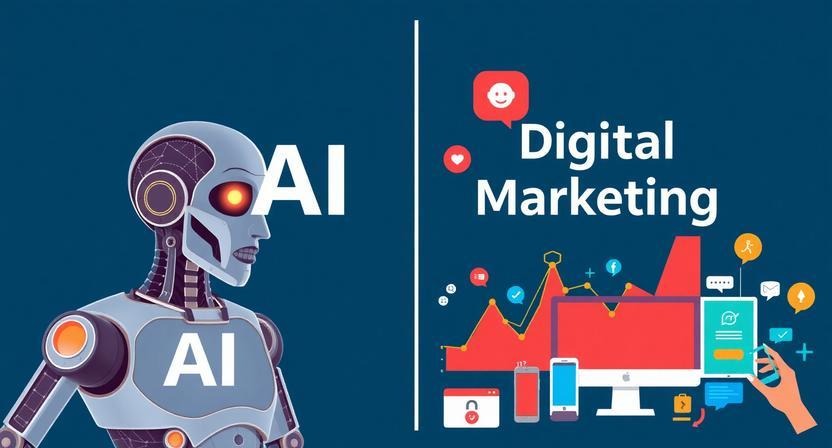
AI In Digital Marketing
The Rise of AI in Business
Introduction
In today’s world, everything is going digital. Businesses no longer depend only on newspapers, TV ads, or billboards. Instead, they use the internet to reach people. This is called digital marketing.
At the same time, a new technology is growing very fast. This is Artificial Intelligence, also known as AI.
Now, many people ask a common question:
Is AI replacing digital marketing? Or are they working together?
This blog will explain everything in very simple and easy words. By the end, you will clearly understand the difference between AI and digital marketing, and how they work together.Artificial Intelligence In Digital Marketing is now a part of how companies work. It makes things happen faster, it is more accurate and it is easier to make things bigger. In marketing, AI tools can look at a lot of data, guess what customers might do next and even make content in seconds. Organizations prefer Artificial Intelligence because it saves time as it is cheaper. It shows clear results.
Artificial Intelligence is very good at doing things that take a time.
Artificial Intelligence makes work easier for companies.
Why Does AI In Digital Marketing Still Matters?
Even though Artificial Intelligence is growing fast, digital marketing is still very important. Marketing is not about numbers, it is about talking to people, telling stories and building trust. Strategies like SEO, PPC ads, social media and making content need creativity and understanding people. Artificial Intelligence can help with these tasks. It cannot replace the emotional impact that human marketers bring.
Digital marketing is about people. However, Artificial Intelligence and digital marketing are also coming together quickly. By 2026, marketers are asking: Is Artificial Intelligence taking over digital marketing, or is it changing how we do it?
What Is Artificial Intelligence in Marketing?
Artificial Intelligence uses machine learning, predictive analytics and automation tools to process amounts of data and make decisions. In marketing Artificial Intelligence is used for:
In addition, predictive analytics helps brands understand customer behavior before it happens.
Meanwhile, automated content creation saves time by generating posts, ads, or emails instantly.
Advertising, when powered by AI, becomes more precise and cost‑effective.
Finally, personalisation engines ensure every customer sees offers and messages tailored just for them.
Artificial Intelligence does not just support marketing it changes it by reducing guesswork and making campaigns more efficient.
Automation and Predictive Analytics
AI handles tasks like organizing keywords, placing ads, and sending emails automatically. It also analyzes data to predict what customers might want in the future such as helping businesses to improve their campaigns before they even launch.
For example, AI can forecast which product a customer is likely to buy, so brands can offer the right deal at the perfect moment.
This is very helpful for companies.
Personalization at Scale
Artificial Intelligence makes it possible to personalise marketing for audiences. By studying customer behaviour, age and preferences, it can recommend products or content that match each person’s interests. Platforms like Amazon and Netflix already do this.
What Is Digital Marketing?
Digital marketing includes strategies:
SEO is all about improving visibility on search engines by using the right keywords and publishing relevant content.
At the same time, PPC advertising lets you run paid campaigns on Google or Meta to attract highly targeted traffic.
Meanwhile, social media marketing focuses on building communities and sparking conversations across Instagram, TikTok, and LinkedIn.
Finally, content marketing ties it all together by creating blogs, videos, and infographics that educate, entertain, and convert audiences.
Human Creativity and Strategy
Digital marketing depends on creativity. A catchy slogan, a viral TikTok video or a touching brand story cannot be made by algorithms. Human marketers bring understanding, emotional awareness and strategic thinking; things Artificial Intelligence cannot truly copy.
The “Replacement” Myth
A lot of people worry that AI will take over marketing jobs. But the truth is, AI only automates tasks — it can’t replace human creativity, empathy, or strategy.
Take ad copy, for example. AI can write a headline, yet it doesn’t fully understand cultural nuance or the emotional pull of a good story. That’s why marketers are still needed to craft messages that connect with people on a deeper level.
The Synergy Model
The future of marketing isn’t about humans versus machines. Instead, it’s about working together. When marketers use AI as a partner, they can get more done in less time.
AI speeds up campaigns by grouping keywords, targeting audiences, and running A/B tests. On top of that, it spots hidden patterns in customer behavior, giving marketers smarter insights. As a result, strategies become sharper and more effective.
And here’s the best part: AI takes care of the repetitive stuff, so marketers can focus on creativity. While the tech handles data and automation, humans can spend more time on storytelling, innovation, and building real connections with audiences. In this way, AI doesn’t replace creativity — it boosts it, creating a powerful mix of human ideas and machine efficiency.
AI Vs Digital Marketing: Key Differences
SEO and Content Strategy
Artificial Intelligence tools like SurferSEO Jasper and ChatGPT can analyze search intent, suggest keywords and draft outlines. Human marketers refine tone, add originality and make content relatable.
Speed and Scalability
Artificial Intelligence is fast. It can analyze thousands of data points in seconds. Run campaigns across many platforms at once. Digital marketing is slower. Ensures authenticity and long-term brand building.
Data Reliance vs Human Insight
Artificial Intelligence depends on accurate data. Without it predictions fail. Human marketers rely on insight, understanding culture, psychology and emotions that data alone cannot explain.
Creativity vs Efficiency
Artificial Intelligence brings efficiency. Creativity is human. Efficiency makes campaigns smooth. Creativity makes them memorable. Success in 2026 depends on balancing both.
Paid Advertising
Artificial Intelligence powers advertising, buying and placing ads in real time. Google’s Performance Max campaigns rely on machine learning. However, Marketers still need to design creative assets and ensure brand consistency.
Social Media Marketing
Artificial Intelligence tools suggest hashtags posting times and content formats. TikTok’s algorithm is Artificial Intelligence-driven. Marketers must create authentic stories that connect with communities.
Email Marketing
Artificial Intelligence personalizes lines, predicts the best send times and automates drip campaigns. Human marketers decide the triggers and brand voice.
How Artificial Intelligence Enhances Digital Marketing
Smarter Campaign Optimization
Artificial Intelligence tests headlines, visuals and CTAs to find what works best. This reduces guesswork. Improves conversion rates.
Improved Customer Segmentation
Artificial Intelligence groups audiences by behavior, interests and demographics. This helps marketers send the message to the right people.
Real-Time Analytics
Artificial Intelligence gives feedback on campaign performance. Marketers can adjust strategies quickly, saving money and boosting ROI.
Challenges and Limitations
Over-Reliance on Automation
Artificial Intelligence can make campaigns feel robotic. Audiences want a touch.
Ethical and Privacy Concerns
Artificial Intelligence raises issues about data privacy, bias and transparency. Marketers must follow rules like GDPR. Use data responsibly.
Skill Gaps
Marketers need to keep learning skills to use Artificial Intelligence tools effectively and combine them with strategy.
Future Outlook
Hybrid Strategies
The future is about mixing Artificial Intelligence with creativity. In other words, Artificial Intelligence handles execution while humans focus on ethics, storytelling and building trust.
The Role of Marketers in an Artificial Intelligence World
Marketers in 2026 are more than strategists. They are technologists, storytellers and guardians of trust. Their job is to use Artificial Intelligence while keeping campaigns authentic.
Personalization at Scale
Artificial Intelligence will make campaigns more personal, not only for groups but also for individuals as it is based on their behaviour, mood and context.
Authority Building
Freelancers and agencies that combine Artificial Intelligence efficiency with storytelling will lead the way. True authority will come from thought leadership, not automation
Final thoughts
Artificial Intelligence is not replacing marketing; whereas it is reshaping it. The best marketers will be those who see Artificial Intelligence as a partner, not a competitor. By combining machine intelligence with creativity, brands can achieve powerful results. In 2026 and beyond, the future of marketing is not Artificial Intelligence vs Digital Marketing; it is Artificial Intelligence-powered Digital Marketing.
