
What Does a Digital Marketer Do? A Complete Beginner-to-Pro Guide
In the modern world, businesses cannot rely on just word-of-mouth or printed ads. They need to be visible online where people spend most of their time. This is where a digital marketer plays a vital role. They help businesses connect with customers, increase engagement, and grow sales. If you are new to this career, this guide will explain everything in simple terms.
Who is a Digital Marketer?
A digital marketer is someone who uses online tools to promote products, services, or brands. Unlike traditional marketing, which focuses on newspapers, TV, or radio, digital marketing happens mostly on the internet.
Digital marketers study online behavior, understand what people like, and design strategies to meet those interests. Think of them as guides who show businesses how to reach the right audience at the right time.
Key Roles of a Digital Marketer
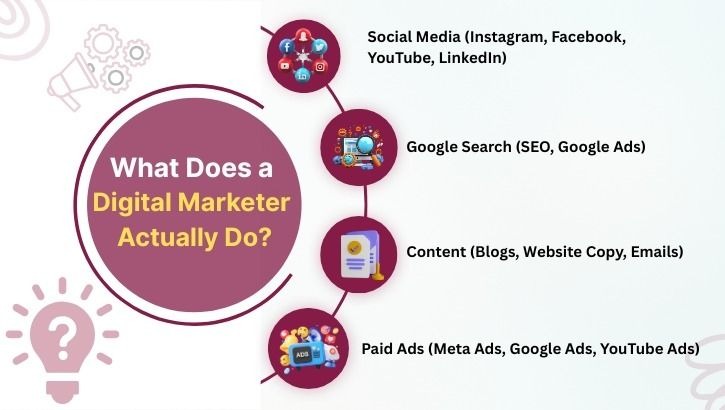
Digital marketers perform several important tasks. Their work depends on the company’s goals, but these are the most common roles:
1. Search Engine Optimization (SEO)
SEO helps websites appear on search engines like Google. Digital marketers use keywords, links, and high-quality content to improve rankings.
For example, if someone searches for “healthy snacks online,” a marketer ensures the website shows up on the first page. Good SEO brings organic traffic, meaning people find your site naturally without paying for ads.
2. Content Marketing
Content marketing involves creating valuable material such as blogs, videos, and infographics. The goal is to attract, inform, and engage users.
For instance, a gardening brand might post tips for growing vegetables. This helps build trust with potential customers and encourages them to try products or services.
3. Social Media Marketing
Social media is where most people spend their time online. Platforms like Facebook, Instagram, LinkedIn, and TikTok are key areas for marketers.
A digital marketer plans posts, runs campaigns, and interacts with followers. Responding to comments or sharing behind-the-scenes content helps businesses feel more personal and trustworthy.
4. Paid Advertising (PPC)
Paid ads, or Pay-Per-Click campaigns, let businesses target specific audiences on search engines and social media.
For example, a company selling running shoes can show ads to users searching for “buy running shoes online.” Paid campaigns often generate quick results and drive people ready to buy.
5. Email Marketing
Email marketing sends updates, newsletters, or offers directly to people’s inboxes.
For example, an e-commerce store can send discount codes to users who left items in their carts. This method keeps customers engaged and encourages repeat purchases.
6. Analytics and Reporting
A digital marketer’s job is not complete without checking results. They use tools like Google Analytics to monitor website traffic, ad performance, and user behavior.
For example, if a social media campaign isn’t attracting clicks, the marketer can adjust the content, targeting, or timing to improve performance.
Skills Required to Become a Digital Marketer
Digital marketing requires a mix of creative and analytical skills. Key abilities include:
- Writing Skills: Clear and engaging content is essential.
- Creativity: Designing content that stands out and grabs attention.
- Analytical Thinking: Understanding data to make better decisions.
- SEO Knowledge: Making websites visible on search engines.
- Social Media Expertise: Knowing how to engage and grow audiences.
Beginners can learn these skills through online courses, tutorials, and practice projects.
How Digital Marketing Helps Businesses
Digital marketing helps businesses grow in multiple ways:
- Reach More People: Online campaigns can target audiences worldwide.
- Cost-Effective: Digital ads are often cheaper than traditional marketing.
- Precise Targeting: Ads can be shown based on age, location, interests, and behavior.
- Real-Time Results: Businesses can track performance and adjust strategies immediately.
For example, a local bakery can use Instagram ads to attract nearby customers and measure exactly how many clicked through to the website.
A Day in the Life of a Digital Marketer
A digital marketer’s day can involve:
- Checking website traffic and ad performance.
- Planning content for blogs and social media posts.
- Running paid campaigns and monitoring results.
- Sending emails to subscribers with updates or offers.
- Analyzing data to optimize future campaigns.
This shows that a digital marketer must balance creativity with analytical thinking.
Tips for Beginners
- Learn Constantly: Stay updated with trends, tools, and strategies.
- Practice Hands-On: Run small projects to gain experience.
- Use Free Tools: Tools like Google Analytics, Canva, and Mailchimp are beginner-friendly.
- Build a Portfolio: Show examples of your work to attract employers or clients.
- Start Small: Focus on one skill first, like SEO or social media, then expand.
Future of Digital Marketing
Digital marketing continues to evolve with AI, video content, and automation. Skilled digital marketers are in high demand across industries. Learning these skills opens doors to freelance opportunities, remote jobs, and corporate careers.
Conclusion
Digital marketing is more than just posting online—it is a strategic mix of SEO, content creation, social media, paid advertising, and analytics that drives real business growth. By combining creativity with data‑driven insights, digital marketers build brand awareness, generate qualified leads, and maximize ROI. In today’s digital era, smart marketing strategies are essential for long‑term success and competitive advantage.
FAQs About Digital Marketing
1. What skills are needed?
Writing, social media, SEO, analytics, and creativity.
2. How long to learn it?
3–6 months for basics; 1–2 years for advanced skills.
3. Can I start without a degree?
Yes! Experience and a strong portfolio are more important than formal education.
4. What tools are essential?
Google Analytics, Canva, Mailchimp, SEMrush, Facebook Ads Manager.
5. Is it a good career choice?
Yes! High demand, career growth, and flexible work options make it very promising.
