
How to Use Hashtags for Marketing: A Clear, Modern Guide for 2026
Hashtags are words and numbers following the # symbol that classify and track content on social media. can add hashtags to social posts, bios and comments on most major platforms, including Instagram, Facebook, TikTok, Twitter, LinkedIn, YouTube and Pinterest.
Hashtags have been part of social media for years, and while the platforms have changed, hashtags still play an important role in helping content get discovered. They may not be the “growth hack” they once were, but they remain a reliable tool for improving visibility, organizing content, and connecting a brand with the right audience.
In today’s digital world, people search for content in many ways through keywords, recommendations, and algorithm-driven feeds. Hashtags support all of these by giving platforms extra context about what the post is about. When used strategically, hashtags help content reach people who are genuinely interested in the topic.
This guide breaks down how hashtags work today, how to choose the right ones, and how to build a simple, effective hashtag strategy that fits marketing goals.
Why Hashtags Still Matter in a Search‑Driven World
Social media platforms now heavily rely on algorithms and user behavior. Even so, hashtags still offer several benefits that make them worth using.
1. They help categorize content
Hashtags act like labels. They tell platforms what the post is about, making it easier for the algorithm to understand and recommend content.
2. They improve discoverability
People often search for hashtags to explore topics they care about. Using the right hashtags helps content appear in those searches.
3. They support brand visibility
Branded hashtags help people recognize brands and encourage them to share their own content using tags.
4. They connect with communities
Hashtags bring together people with shared interests, whether it’s fitness, travel, skincare, or entrepreneurship.
5. They help join trends
Trending hashtags allows you to participate in conversations happening right now, increasing chances of being seen.
Hashtags may not guarantee viral reach, but they still help content reach the right people and that’s what matters most.
The Five Types of Hashtags Every Brand Should Use
A strong hashtag strategy includes a mix of different hashtag types. Each one serves a different purpose.
These hashtags are popular at the moment. They are often tied to events, holidays, or viral topics.
Examples:
#MondayMotivation
#WorldMentalHealthDay
#NewYearNewMe
When to use them:
When I want to join a larger conversation or increase short‑term visibility.
2. Niche Hashtags
These hashtags target a specific audience. They’re smaller, more focused, and often more effective for engagement.
Examples:
#VeganSkincare
#RemoteWorkLife
#HandmadeBusiness
Why they matter:
They attract people who are genuinely interested in content.
3. Branded Hashtags
These are unique to business. They help build identity and encourage user‑generated content.
Examples:
#ShareACoke
#JustDoIt
#MyBrandName
Best use:
Campaigns, events, product launches, and community building.
4. Community Hashtags
These hashtags connect people around shared interests or lifestyles.
Examples:
#BookLovers
#FitnessJourney
#MomsWhoRun
They help join active, engaged groups.
5. Campaign Hashtags
These are used for promotions, contests, or seasonal events.
Examples:
#SummerSale2025
#BlackFridayDeals
#GlowUpChallenge
They help track engagement and measure campaign performance.
How Many Hashtags Should We Use on Each Platform?
Each platform treats hashtags differently. Here’s the updated guide for 2025:
- Use 9–12 hashtags
- Mix trending, niche, and branded tags
- Place hashtags in the first comment, if prefer a clean caption
Instagram still benefits from hashtags, especially niche ones.
TikTok
- Use 3–5 hashtags
- Focus on relevance
- Use hashtags to support SEO‑friendly captions
TikTok’s algorithm relies heavily on content and keywords, but hashtags still help categorize video.
- Use 1–3 hashtags
- Keep them professional
- Stick to industry‑specific tags
LinkedIn hashtags help categorize content and improve search visibility.
X (Twitter)
- Use 1–2 hashtags
- Best for events, awareness days, and trending topics
- Keep them short and clear
Hashtags help with search ability and real-time conversations.
- Use 1–2 hashtags
- Use sparingly
- Blend them naturally into sentence
Facebook hashtags don’t boost reach much, but they help with organization.
How to Find the Best Hashtags for Content?
Choosing the right hashtags doesn’t have to be complicated. Here’s how to do it effectively:
1. Use Hashtag Research Tools
Tools like Sprinklr, Keyhole, and Brand24 help consider hashtag performance, popularity, and engagement.
2. Study Competitors
Look for what hashtags are successful in niche use for brand. This gives insight into what works.
3. Explore Influencers
Influencers often know which hashtags attract strong engagement. Their posts can give inspiration.
4. Use Platform Search
Search for keywords on Instagram or TikTok to find related hashtags and see how active they are.
5. Track Performance
Monitor which hashtags bring the most reach and engagement and keep using those.
Best Practices for Hashtag Marketing
Here are simple guidelines to help use hashtags effectively:
Do:
- Keep hashtags relevant
- Mix broad and niche hashtags
- Use branded hashtags consistently
- Refresh hashtag list regularly
- Track performance and adjust
Don’t:
- Don’t use too many hashtags
- Don’t rely only on trending hashtags
- Don’t use hashtags that don’t match the content
- Don’t repeat the same hashtags every time
- Don’t use long, complicated hashtags
A Simple, Effective Hashtag Strategy Can Follow
Here is a step-by-step plan to use right away:
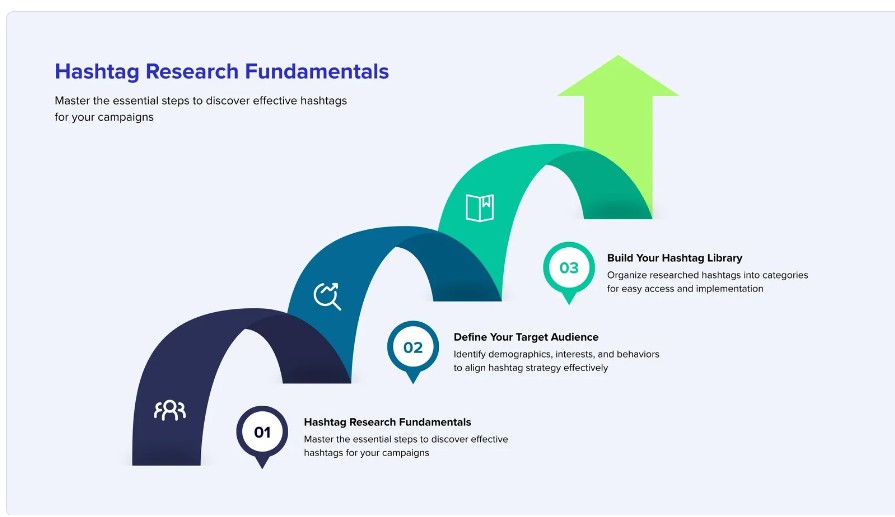
Step 1: Understand the audience
What topics do they care about? What hashtags do they follow?
Step 2: Research hashtags
Use tools, platform search, and competitor analysis.
Step 3: Create a hashtag list
Make a list of 20–40 hashtags grouped by theme or content type.
Step 4: Mix different types
Use trending, niche, and branded hashtags together.
Step 5: Test combinations
Try different sets of hashtags and see which ones perform best.
Step 6: Track and refine
Check analytics and update the list monthly.
Examples of Good Hashtag Use
Example 1: A Fitness Coach
Uses:
#FitnessJourney
#HealthyLifestyle
#WorkoutMotivation
Example 2: A Small Bakery
Uses:
#CupcakeLove
#BakingFromScratch
#LocalBakery
Example 3: A Tech Startup
Uses:
#FutureOfTech
#AIInnovation
#TechCommunity
These hashtags are simple, relevant, and easy to understand.
Common Mistakes to Avoid
- Using hashtags that don’t match the content
- Using only trending hashtags
- Adding too many hashtags
- Ignoring analytics
- Copy-pasting the same hashtags every time
- Using hashtags that are too broad (#Love, #Happy, #Food)
Conclusion
Hashtags may not be the main driver of reach anymore, but they remain a valuable part of a modern social media strategy. They help content get discovered, support engagement, and strengthen brand presence across platforms.
The key is to use hashtags thoughtfully, not randomly. Mix trending, niche, and branded hashtags. Keep them relevant. Track what works. And update strategy regularly.
When hashtags are used with purpose, they become a powerful tool that supports content, brand, and long-term marketing goals.
