
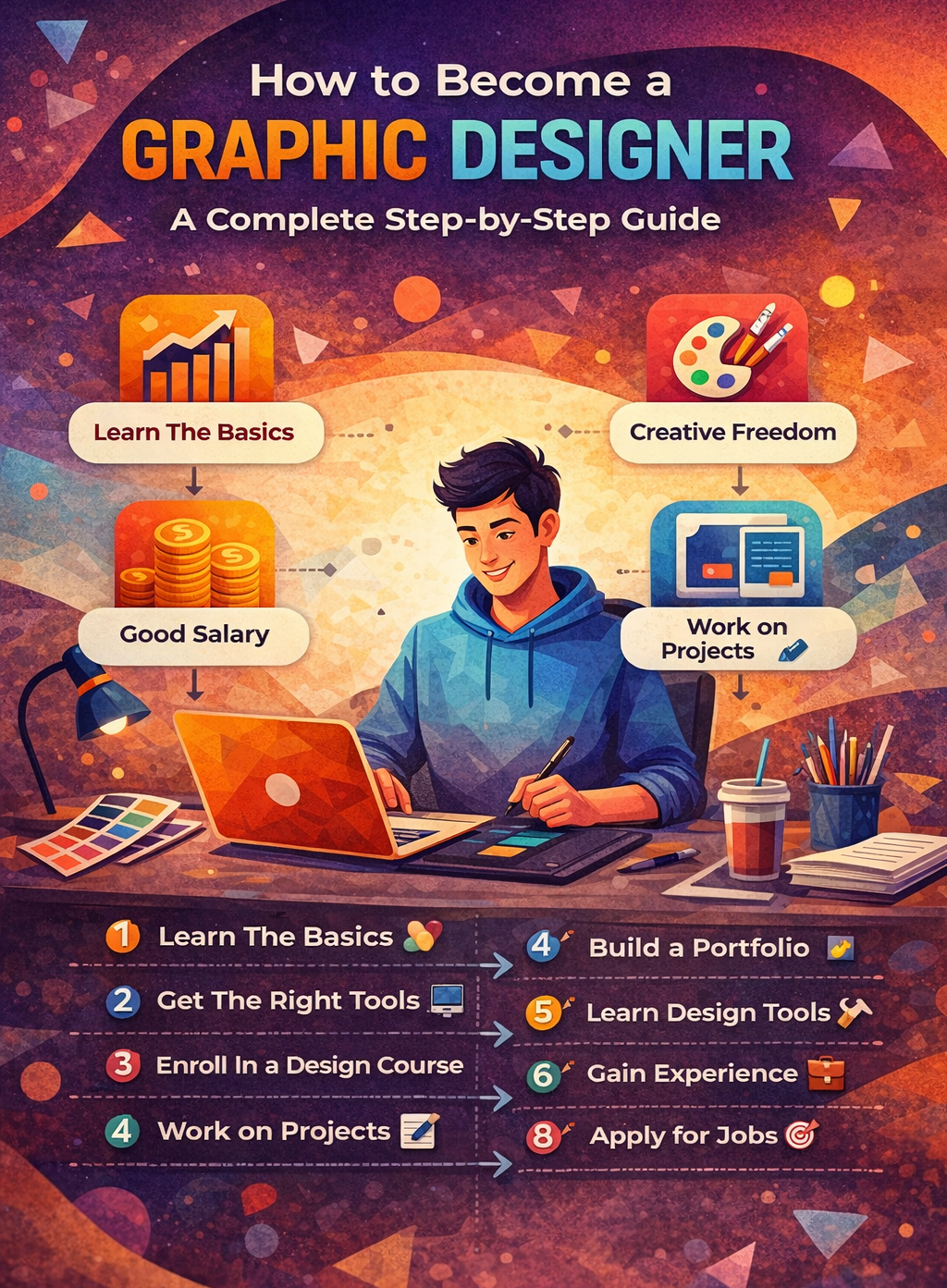
Introduction to Graphic Design as a Career
One major reason people choose graphic design as a career is freedom. You can work full-time for a company, freelance with international clients, or even start your own design agency. Remote work is common, and success depends more on skills and creativity than location. All you truly need is a computer, design software, and a strong portfolio.
Graphic design also grows with you. Beginners often start with simple projects like social media posts or basic logos. With experience, designers can specialize in branding, UI/UX design, motion graphics, packaging, or 3D visuals. As your expertise increases, so do your earning opportunities.
Despite the rise of AI tools, skilled graphic designers are more important than ever. AI can assist with speed and automation, but creativity, strategy, and human judgment remain irreplaceable. If you enjoy creativity, problem-solving, and continuous learning, graphic design can be a rewarding long-term career.
What Does a Graphic Designer Do?
A graphic designer creates visual content to communicate ideas effectively. In practice, this includes:
- Designing logos and brand identities
- Creating social media graphics and advertisements
- Designing websites and mobile app interfaces
- Producing posters, brochures, and packaging
- Working with typography, color systems, and layouts
A graphic designer acts as a visual translator—turning abstract ideas into designs that are easy to understand and visually engaging.
Why Choose Graphic Design as a Career?
Graphic design combines creativity with practicality. This is the reason why a lot of people pick this field:
- 🌍 Strong global demand
- 💻 Remote and location-independent work
- 🎨 Creative freedom
- 💰 Freelance and full-time income options
- 🚀 Career growth through skill development
As digital platforms continue to expand, visuals remain the primary language of the internet—making graphic designers essential in 2026 and beyond.
Skills Needed to Become a Graphic Designer
You don’t have to learn everything at once. Focus on mastering these core skill areas.
Creative Skills
Creativity is the foundation of design. This includes:
- Visual thinking
- Color awareness
- Imagination
- Problem-solving
Creativity improves with practice—the more you design, the stronger it becomes.
Technical Skills
Ideas must be executed professionally. Essential tools include:
- Adobe Photoshop
- Adobe Illustrator
- Adobe InDesign
- Figma or Adobe XD
These tools allow designers to transform ideas into polished visuals.
Soft Skills
Designers often collaborate with clients and teams. Important soft skills include:
- Clear communication
- Time management
- Client interaction
- Openness to feedback
Great designers listen carefully before they design.
Educational Paths to Become a Graphic Designer
There is no single path—choose what fits your goals and budget.
Formal Education
You can study graphic design at:
- Universities
- Colleges
- Design institutes
This provides structure but is not mandatory.
Online Courses
Online learning is flexible and cost-effective. Popular platforms include:
- Coursera
- Udemy
- Skillshare
- LinkedIn Learning
Ideal for beginners and working professionals.
Self-Learning
Many successful designers are self-taught. Use:
- YouTube tutorials
- Free design blogs
- Practice projects
Self-learning requires discipline but delivers excellent results.
Essential Graphic Design Tools You Must Learn
Think of tools as your digital paintbrushes.
Core Design Software
Adobe Photoshop – photo editing and creative design
- Adobe Illustrator – logos and vector graphics
- Adobe InDesign – print and publication layouts
UI/UX Design Tools
Figma
- Adobe XD
AI Tools for Designers
AI enhances productivity, not creativity. Useful tools include:
- Canva AI
- Adobe Firefly
- Midjourney
- DALL·E
Designers who use AI smartly gain a competitive edge.
Understanding Design Principles
Strong design is built on fundamentals.
Color Theory
Colors influence emotions and perception. Learn about:
- Color harmony
- Contrast
- Brand psychology
Typography
Fonts communicate personality and clarity. Understand:
- Font pairing
- Readability
- Visual hierarchy
An otherwise excellent design can be ruined by poor typography.
Layout and Composition
Layout guides the viewer’s attention. Focus on:
- White space
- Alignment
- Visual balance
Good design leads the eye naturally.
Building a Strong Graphic Design Portfolio
Your portfolio speaks louder than your resume.
What to Include
A strong portfolio should feature the following:
- 8–12 high-quality projects
- Real or self-initiated designs
- Clear explanations of your design process
Quality always matters more than quantity.
Portfolio Platforms
Share your work on:
- Behance
- Dribbble
- A personal website
Make it easy for clients to view and contact you.
How to Practice Graphic Design Daily
Consistent practice is the fastest way to improve.
Daily practice ideas:
- Redesign famous logos
- Create social media graphics
- Join design challenges
- Recreate designs to understand techniques
Even 30 minutes a day makes a big difference.
Freelancing vs Full-Time Graphic Design Jobs
Both paths offer unique benefits.
Freelancing
Popular freelance platforms:
- Fiverr
- Upwork
- Freelancer
- PeoplePerHour
Freelancing provides flexibility and global clients.
Full-Time Jobs
In-house roles offer:
- Stable income
- Team collaboration
- Structured learning
Ideal for beginners seeking experience.
How to Get Your First Graphic Design Client
Your first client is the hardest—but also the most exciting.
Try these approaches:
- Offer free or discounted starter projects
- Promote your work on social media
- Join design and business Facebook groups
- Reach out to friends and local businesses
Once you land one client, confidence and referrals grow.
Common Mistakes Beginners Should Avoid
Avoid these early mistakes:
- Copying designs without understanding
- Ignoring feedback
- Using too many fonts or colors
- Underpricing your work
- Skipping design fundamentals
Mistakes are learning opportunities—use them wisely.
Future Scope of Graphic Design
Graphic design has a strong future. Growing areas include:
- UI/UX design
- Motion graphics
- 3D design
- AI-assisted design
- Brand strategy
Designers who adapt to new tools and trends will thrive.
Conclusion
Becoming a graphic designer is a journey, not a shortcut. You don’t need perfection—only consistent progress. Learn the basics, practice regularly, build a strong portfolio, and stay curious. Graphic design rewards those who evolve with time.
If you can imagine it, you can design it.
FAQs
1. Can I become a graphic designer without a degree?
Yes. Skills and a strong portfolio matter more than formal education.
2. How long does it take to learn graphic design?
Basic skills take 3–6 months. Mastery takes years of practice.
3. Is graphic design good for freelancing?
Yes. It is one of the most in-demand freelance skills worldwide.
4. What is the average income of a graphic designer?
Income depends on experience, niche, and location.
5. Is graphic design future-proof?
Yes—especially with digital growth and AI integration.
6. How much can a graphic designer earn?
Earnings depend on skill level, niche, and experience. Beginners earn less, while experienced designers can earn high monthly income through jobs or freelancing.
7. Is graphic design still in demand in the future?
Yes. With digital marketing, social media, apps, and branding growing rapidly, demand for graphic designers continues to rise.
8. Can AI replace graphic designers?
No. AI can assist with tasks, but creativity, strategy, and human decision-making cannot be replaced.
